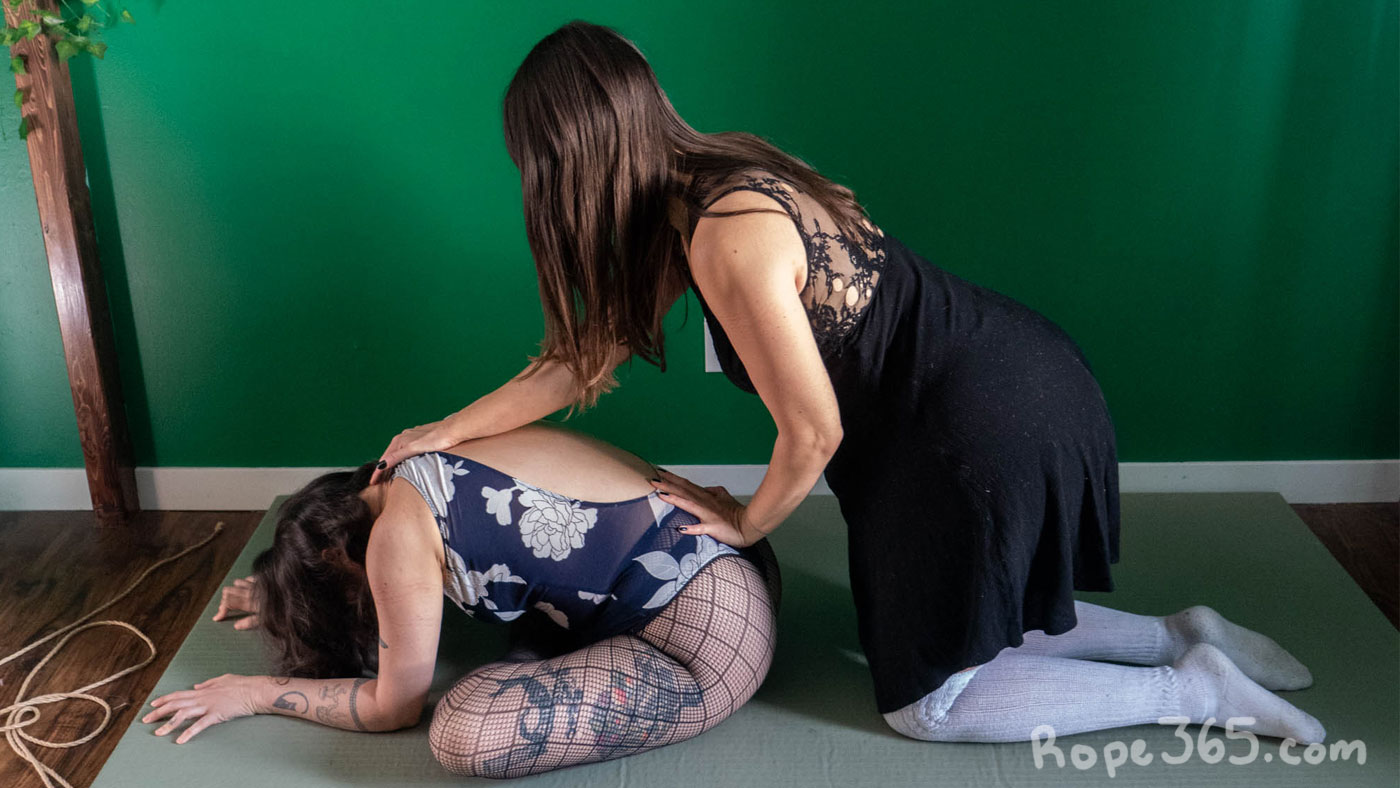
The body is our vehicle in the exploration of rope, and to enjoy it to the maximum, it is important to take good care of it. As with any movement-based activity, warming up your muscles beforehand reduces injury risk, while stretching will improve mobility for the long run. Let’s collect all of our body care habits to take care of our body.
Warming Up the Body
Warming up by moving each joint in several directions will activate circulation and help protect them when doing more intense physical activities. There is a huge variety of exercises you can pick from. The goal is to get the body moving and explore your full natural range of movement. Start with 10-15 repetitions for a light warm-up. This can be beneficial for both the person tying and the person being tied.
Warming up the Arms
When warming up the upper limb, you’ll want exercises that get your shoulder rotating and abducting, your elbow bending, and so on with your wrist and fingers. You can also warm up some of your chest and back muscles at the same time by moving the arms. Here are some easy exercises to try:
- Arm rotation for the shoulders, make big circles in both directions.
- Jumping jacks for shoulder abductions (with bonus lower body)
- Elbow flexing
- Wrist rotations
- Open and close the hand really quick for finger warm-up
- Open and close the elbow in front for the chest and back
Coming soon, picture of warm-up
Warming up the Lower Body and Spine
If you’re expecting your rope session to be bit dynamic, you should warm up the whole body. Here are a few ideas for exercises to warm up the back and the lower body:
- Cat and cow pose. Take the time to breathe in to expand your spine as you move into the positions.
- Russian twists
- Hip rotations
- High knee running
- Feet to the butt running
- Ankle rotation
- Walk with different parts of the foot, front, back, inside, outside
Coming soon, pictures of warm-up
Neck Muscles and Bondage Positions
When we stand straight or lie down, the muscles of the neck are passively engaged, but when we tie someone in an imbalanced position, they have to be active to hold their head in a comfortable position. For most people, the neck muscles will get sore very quickly. Some strategies may be to add something to hold the head or just change the position after a while.
[Coming soon, images of position that makes it difficult for the neck]
You can reduce the risks of muscle injury by warming up the neck muscles ahead of time. Start with some gentle rotations in both directions, without leaning too much to the back. Then side to side, lateral flexions. And my favourite is called turtle and pigeon, which is moving the head forward, drawing a vertical circle with the chin in both directions. A good warm-up will explore the natural range of motion and get the blood flowing in the muscles.
[Coming soon, images of neck warm-up]
In the long run, you can also strengthen the neck muscles with some exercises. For each of them, we want to start with the neck in a neutral position, with the spine aligned, the head pushed back above the shoulder. Strengthening the back for better posture will also help the neck. Here are a few easy exercises:
- Isometrics: Use your hand or an elastic band to create an opposing force and push in all directions: forward, backward, left-right rotation, lateral flexion etc.
- Chin tuck: Lie on your back, and tuck your chin toward the neck. Hold for a few seconds. Repeat a few times.
- Lateral flexion: Lie on your side and flex the neck up and down. Repeat a few times.
- Wall push: For a bit more challenge, lean against the wall, and push your neck to the back to straighten it up using the back of the head.
[Coming soon, images neck strengthening exercise]
Stretching
Stretches can help increase your range of motion, which can help reduce injury and feel more comfortable when moving with your body both in rope and in your daily life. Heavy stretches are not recommended right before an intense exercise such as tying or being tied, as they temporarily weaken the body. Make sure your body is warmed up before stretching to reduce risks of injury, and generally be gentle and patient with yourself by listening to your limits. Start by holding each stretch for five breaths, then relax into it for a deeper stretch.
You can deepen a stretch by contracting the targeted muscle, and then relaxing back into the stretch. This method is called proprioceptive neuromuscular facilitation (PNF) and is considered one of the most efficient stretching techniques by medical professionals. Be mindful not to overstretch using this method and simply relax into the stretch without pushing.
Many conditions may affect how you should stretch. Hypermobile people should take extra care to engage their muscles when stretching, while people with arthritis might have to focus on specific stretches. During pregnancy, the body releases hormones that make it more mobile which can make it more prone to injury. Follow the guidelines of your medical professional for any particular condition. Coming soon
Upper Body Stretches
Here are some examples of stretches you can try:
- Prayer position to stretch the wrists, palms together or knuckles together
- Join hands in the back and stretch the shoulders open
- Child’s pose
- Use a rope or a towel, point the elbow up and pull down with the other hand, then do the opposite and pull the lower arm up.
- Grab a rope or a pole at a wider distance than your shoulder and rotate the pole front and back.
[coming soon, pictures of solo]
Spine and Lower Body Stretches
Here are some examples of stretches you can try:
- Backbend – camel, bow pose
- Forward bend – straight leg or butterfly pose
- Open legged lean forward, side
- Sitting twist
Coming soon – pictures of stretches
Partnered Stretches
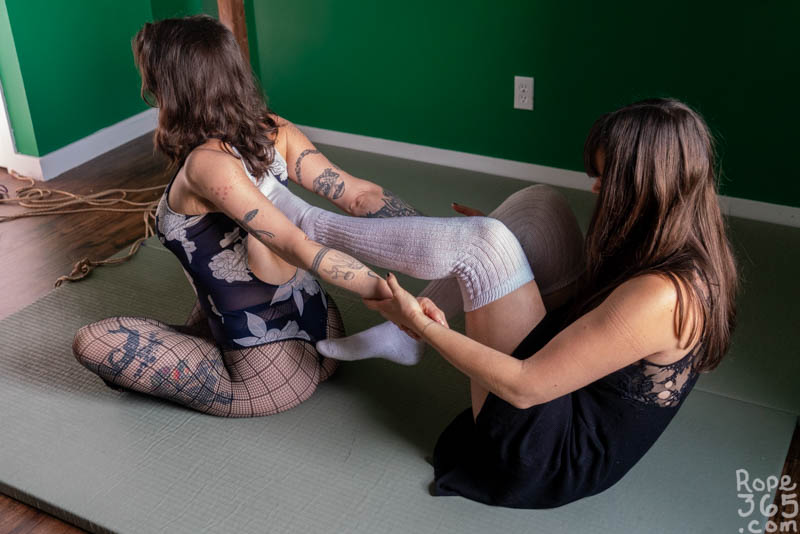
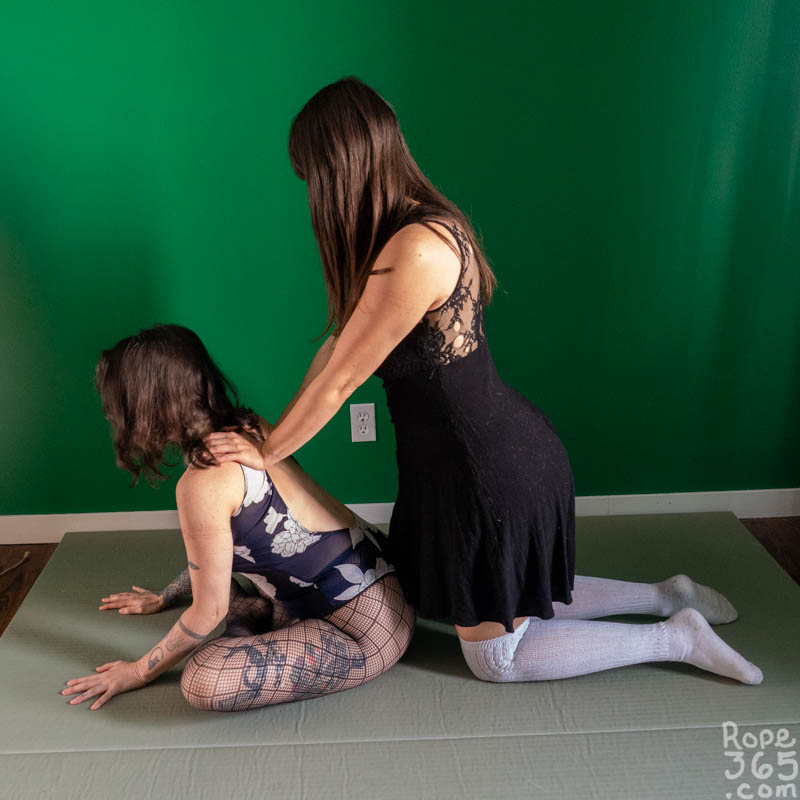
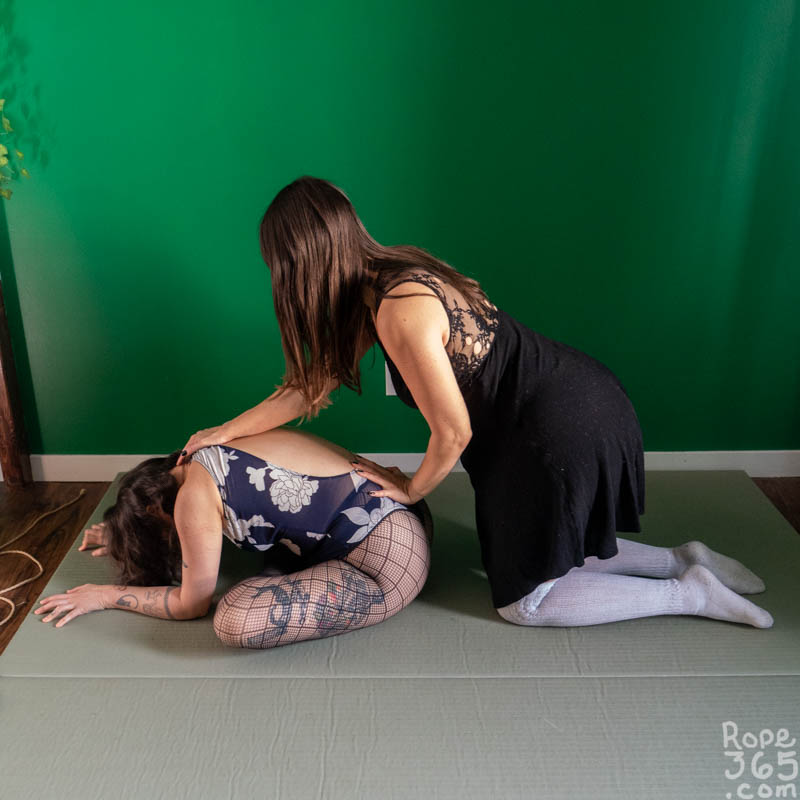
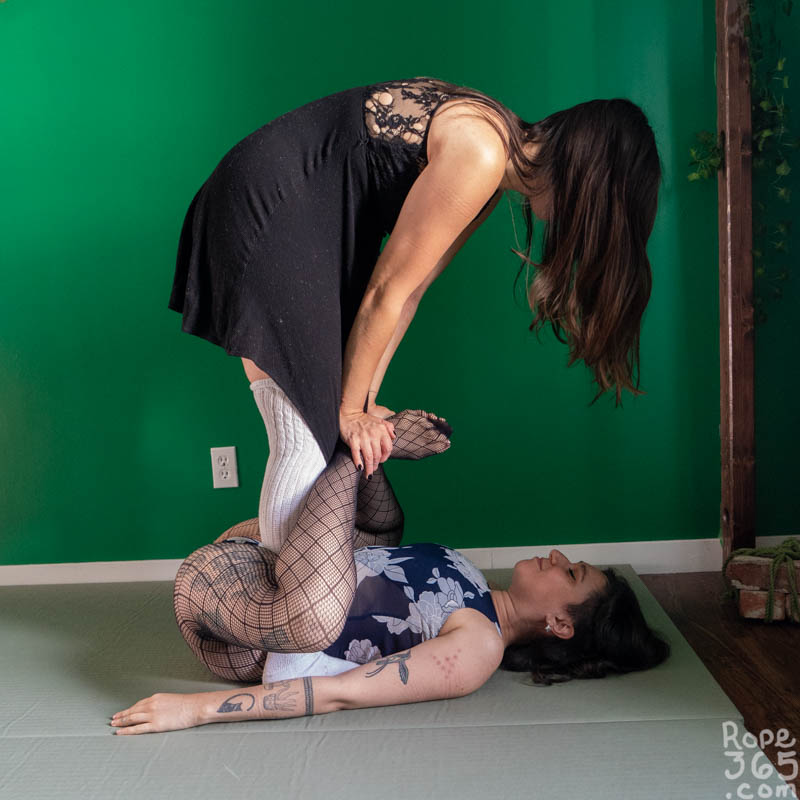
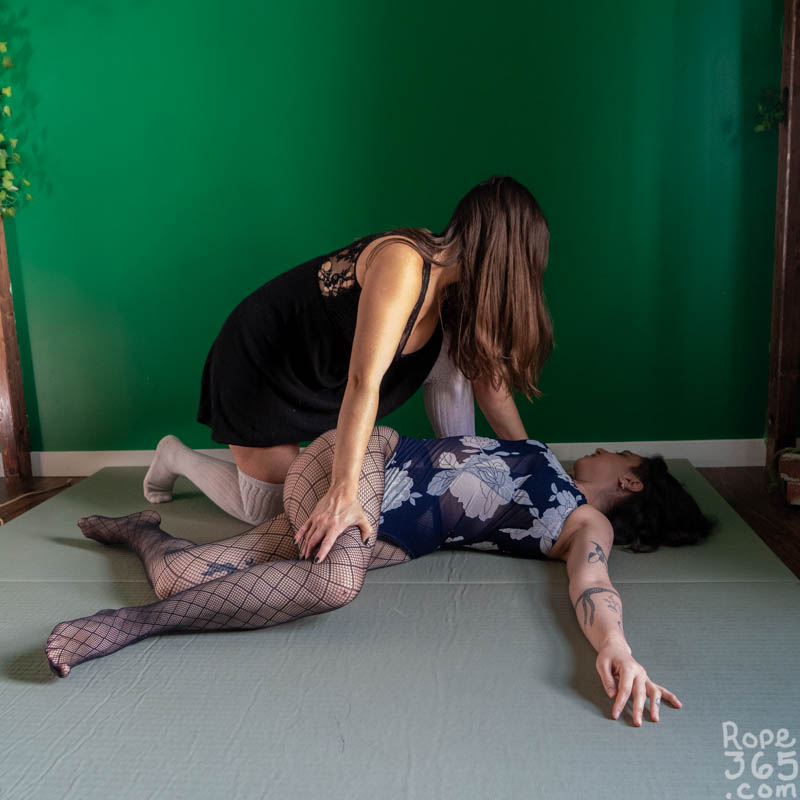
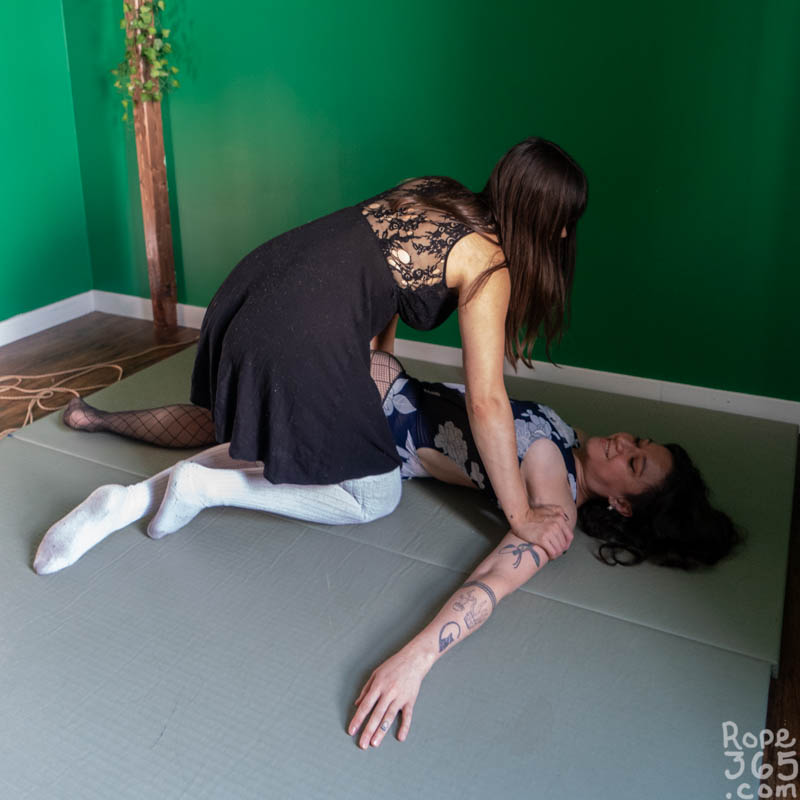
Partner stretches are a great way to stretch our body further and connect together at the same time. It requires patience and good communication to be done safely and avoid overstretching. Listen to the body resistance and go gently to feel its limits. Relax into the stretch and do not push. It can be interesting to do some light stretching after an intense tie to release the tensions accumulated in the body during the restriction. Here are some examples:
- Arms straight in the back, palms facing out. Bring the elbows closer to each other, lift the arms gently. This is especially satisfying after being in a box tie for an extended period of time.
- More coming soon
- Assisted forward bend
- Assisted splits
Massage
Coming soon
Hand care
Coming soon
Practice Time!
There are an infinite variety of warm-ups and stretches you can do. Look into yoga and other physical activities to find what makes your body the best.
Exploration ideas:
- Coming soon
Inspirations and Resources
- Warming Up for Shibari by Shibari Study
- PNF Stretching: A How-To Guide by Peggy Pletcher
- Best Stretches for Arthritis Morning Stiffness by Ellen Greenlaw
- Riggers – General Hand Care and Maintenance
- Rope tops: what is your hand care routine?
- Pregnancy and BDSM by Stephanos and Shay
Or return to Anatomy for more options
Credit: