When you start a brand new set of rope, it will generally be stiff and hard to tie with. As the rope gets used, it will soften over time. To help prepare your rope for its first adventure, you might want to process it to make sure it is clean and soft enough to use on the skin.
Should I Condition my Rope?
The decision to condition a rope or not is a personal choice. It also depends on the type of rope you are using. Many people opt to have a rope maker do the conditioning, as this is a time-consuming process; others prefer to do it themselves as a bonding experience with their rope, to make sure to get the right characteristics, or to save money. Even if you get the conditioning done by someone else, it is interesting to understand the different techniques to make sure you request the preparation that fits your needs.
If you are using synthetics, chances are your ropes can be used as is. You might still want to process it to make it softer and clean before its first use.
Natural fibre will need at least some conditioning. Stiff rope with a tight twist will require more work. Cotton ropes may be ready to use after a simple cleaning, but hemp or jute are likely to be stiff, hairy, scratchy, and may contain some nasty chemicals. The conditioning process should help it make a clean, smooth and flexible rope.
In particular, getting rid of chemicals in the rope can be an important part of the processing to make it safe for use. Rope marked as “food-grade” is safe and ready to use. Jute is often spun using JBO or jute batching oil. It is common for people to have allergic reactions to it, the petroleum smell can be unpleasant, and the risks of long-term exposure are unknown. Removing the JBO will also weaken the rope integrity. Some parts of the process will help remove some of it, but one can never be truly sure it is completely gone. If you are concerned with the presence of JBO in your rope but you still want to use jute, invest in rope spun without JBO.
Some prefer to use their rope raw or very close to it, and let the process of tying make the rope softer; others will prefer to have their rope perfect from the get-go. Everything is a compromise, as the process of conditioning rope does weaken it and will shorten its lifespan.
Ebi’s Rope Recipe
Each person processing their own rope will have a different set of steps depending on their personal preference. I’m documenting my own here to serve as a starting point if you don’t already have one. By understanding the steps and why they are organized this way, you can modify it to fit your needs. If you buy your rope already processed, it can be interesting to learn about their recipe so you can better understand your own preferences.
For cotton, polyester (ex: POSH) and nylon, I cut the rope, make the ending, wash it in a laundry bag, and hang it to dry.
For jute and hemp, there are a few more steps. Note that this recipe starts from a raw spool; you can check crafting if you wish to spin your own rope from twine.
- Cutting and knotting
- I cut my spool of rope into ropes of 8m+ a few inches to tie the end knots. First I measure with a measuring tape, then I use the first rope as a guide to measure the other ropes.
- I usually do the knots right away as I cut, and my preference is the thistle knot. I use pliers to tighten it afterwards, and dip the tip in water to make the knot compact.
- Pro tip: place a water bottle in the middle of the spool to prevent it from unravelling.
- Heating and breaking the fibre
- I put 2-4 ropes per medium-sized laundry bag in the drying machine. The bag must have very small holes to prevent rope dust from clogging the dryer. It is recommended to open the bag outdoors to manage the rope dust created by this process.
- If the rope is JBO-free, 30 minutes is sufficient to make the rope softer. If the rope has JBO, I leave it much longer, until the petroleum scent is gone (time varies significantly; it can take up to several hours).
- If I don’t have access to a drying machine, I use the manual method of twisting the rope around a fixed point and rubbing against itself. Be careful when using this method, as you may overprocess the rope, significantly reducing its lifespan.
- I used to bake my rope in the oven to get rid of the JBO, but that was a very stinky (and potentially toxic) process. I find the dryer just gets rid of it in a more convenient way.
- Singeing
- I use a small camp burner to rub my rope in a flame to get rid of fuzzies. Absolutely do not use a candle, as it covers the rope in soot.
- I start by folding it in 8, and quickly rubbing it in the flame. Then in two to finish it more evenly. Be mindful not to catch the rope in the burner.
- If the rope has JBO, I may give it more passage on the flame to get rid of the remaining smell. Absolutely do this outside if your rope has JBO.
- Some people like to clean the rope afterwards with a dry cloth. I don’t find this necessary as I personally like the smell of the flame, and it’s temporary.
- Oiling
- I put some Jojoba oil on my hands and rub it in both directions on the rope folded in two. I add more oil whenever my hands aren’t soaked with oil anymore.
- If someone has allergies to jojoba, I would use mineral oil instead, but I have never encountered this. If you decide to try any other oil, make sure it won’t go rancid.
- Some people use gloves. I prefer to feel the rope, and oil is good for your hands.
- I don’t put wax as I don’t like it, but if you do, the rope needs to be oiled beforehand as the wax traps humidity, if the middle of your rope is dry, it will make it brittle on the long term. Once you have applied the wax, put it in the oven at low temperature, or in the dryer at high temperature to make it sink into the rope. Try it on a small sample first, as wax cannot be removed afterwards.
From there, the rope is ready to use. I usually underprocess my ropes, then use the newer one for connecting lines. Once they are older, they are perfect for harness and body rope. As they age, I often make shorties with damaged rope, or use them for messy play for a final showdown.
The order of the steps is important. Cutting the rope first allows it to be in a manageable size for the subsequent steps. Breaking the fibres makes the rope very fussy, which is removed by the singeing. And finally, oiling comes last as heating and singeing burns the oil, and we want to make sure our rope isn’t dry before use.
Rope Conditioning Techniques
Different techniques will affect the rope in different ways. Understanding the purpose of each step will help you create your perfect recipe.
Breaking/polishing rope
Goal: Break the hardest fibres to make the rope supple and flexible. Also affects the twist of the rope and can make the rope weaker.
Breaking the rope makes a lot of dust, make sure to do this outside or in a well-ventilated area. Masks, glasses and/or gloves are also recommended.
- Hang a carabiner (nice round bottom, not sharp otherwise it damages the rope)
- Pass one end of the rope in the carabiner and wrap it around itself. Some do 3 or 4 twists, or make a Munter hitch.
- Make a seesaw movement a few times. Then progressively apply this process on the entire rope. More movements mean more supple rope but also weaker rope, find the right balance for your needs.
Singeing
Goal: removing the fuzzies, making the rope smoother. This will likely burn off some of the chemicals in the rope if there are any, but not all of it. Do not singe synthetic rope as it will melt.
For singeing, you will need a flame; a gas stove works great, or a kitchen torch will do the job. Flames like candles will work but will also put a lot of soot on the rope. Run the rope in the flame without stopping (otherwise, it may damage the rope). Repeat until all the fuzzies are gone. Once you are done, remove the soot from the rope by running a dry or damp cloth along the rope if any.
Wet Treatment
Goal: clean the ropes and make them more flexible. This will generally remove some of the chemicals in the rope if there are any, but not all of it. Some types of rope are sensitive to water and may become weaker when wet.
There are a couple of methods to do a wet treatment on the ropes. You can decide to add soap or not.
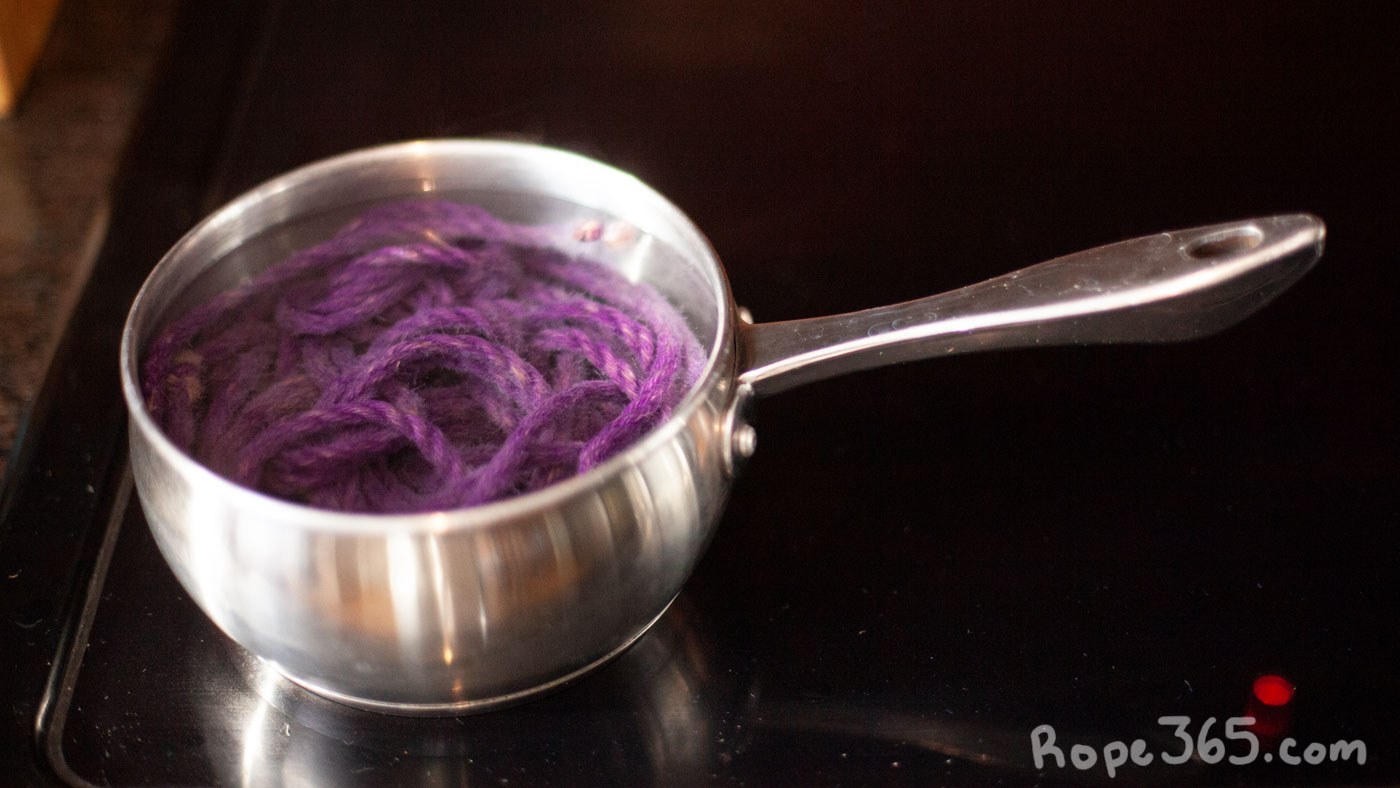
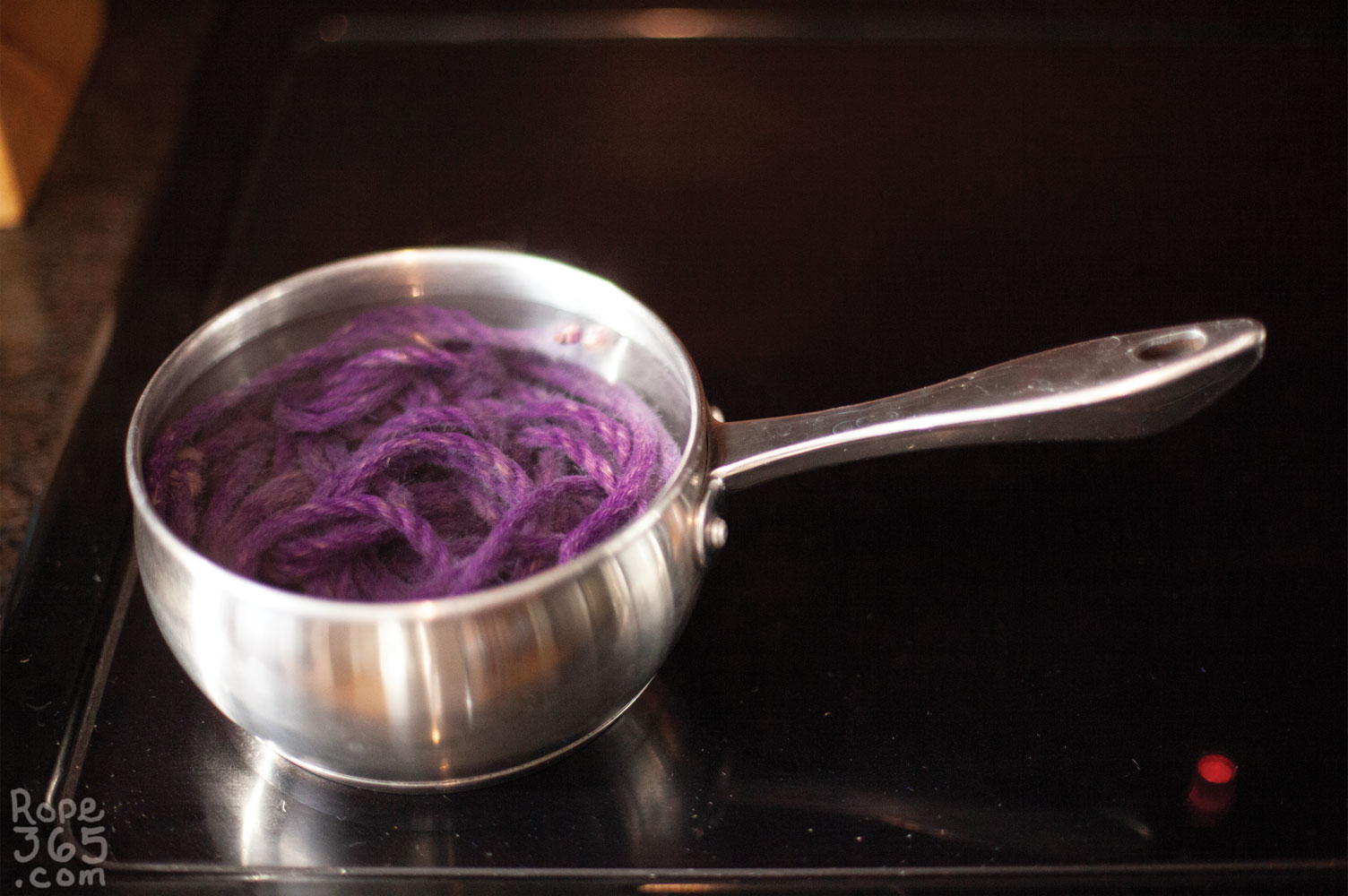
- Boiling: Put in a pot, cover with water, bring to boiling temperature.
- Washing machine: put in a laundry bag or coil in a chain sinnet to prevent tangling.
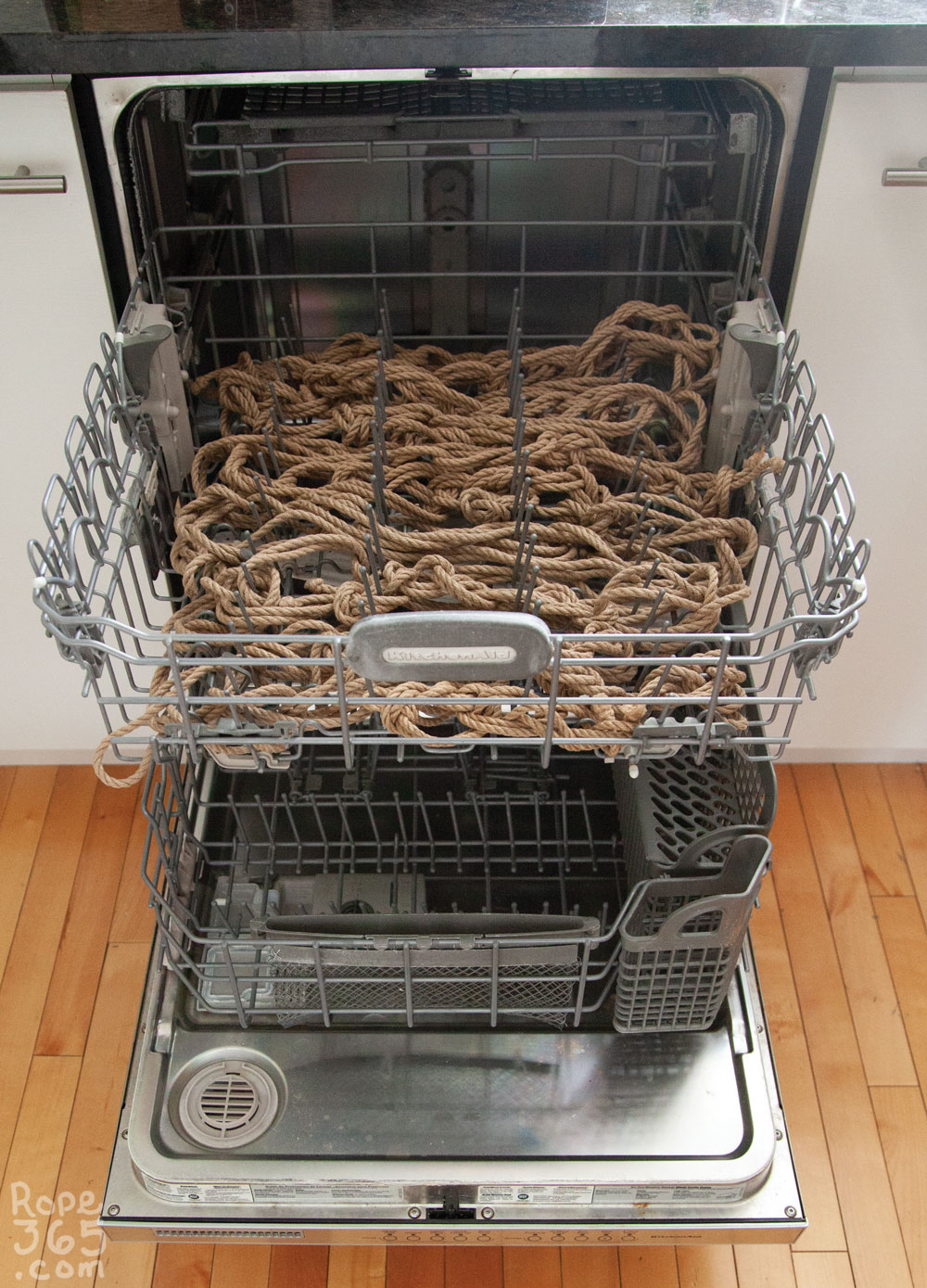
- Dishwasher: Keep the rope well in place. Deactivate the heating cycle if you don’t want to add heating treatment
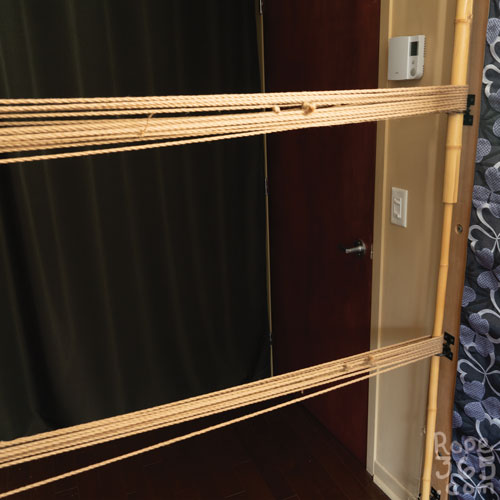
Drying your rope improperly afterward can make it full of kinks. Most rope can be hung up to dry, but the best is to dry it under tension. This process is critical for Jute to maintain its integrity. Otherwise, it will shrink and deform. To dry rope under tension, you can use two points and pull the it between the two. You will have to retension the rope as it dries to keep it straight. An alternate method is to hang it with a weight on it so that the weight maintains the tension as it dries off. If you fail the drying process and end up with ropes full of kinks, you can always try to make it wet and try again.
Baking
Goal: kill germs and remove chemicals from the rope. Also allows wax to melt into the rope. This process may make the rope weaker because it may remove oil that may be essential to its structure, and getting the rope dry makes it more brittle.
Baking the rope at low temperatures will make oil in the rope evaporate which is great if you want to get rid of it. You will need to keep good ventilation as the chemicals evaporate so that they actually leave the rope. The vapours from baking JBO are likely to be toxic, so proceed with caution. Even if it is not clear if the JBO can be completely removed with baking, people who are allergic seem to do much better after this process.
Drying machine
Goal: soften the rope and apply heat to remove JBO, or melt wax.
Putting rope in the tumble dryer s will break the rope and make it softer with movement. This also allows you to add heat. It is recommended to use a laundry bag to prevent the dust from clogging the machine. Putting several ropes per bag gives better results as they rub of each other.
Waxing & Oiling
Goal: keep the rope smooth and healthy. Dry rope will quickly become more fragile.
Oil is an important process for natural rope, it should be done regularly. Some oil will go rancid or cause allergies, make sure you pick wisely. Mineral oil is the safest bet as it is cheap, easy to acquire and hypoallergenic. You can also try other types like jojoba that will be slightly more expensive but more long lasting. To put oil on your rope, you can just put some in your hand, or soak a small cloth and run the oil over the rope on its whole length.
Adding wax is another option; some like how slick it makes the rope, while others hate the texture. To apply wax, mix it with oil into a small cake, and then rub the cake along the rope. It is best to oil the rope before adding the wax as the wax may seal the rope and you want to keep the core from getting dry. It is recommended to heat the rope (by baking or using a drying machine) after applying the wax so that the wax can sink into it.
Sun and Freezing
Goal: Kill germs on the rope.
A more unusual cleaning technique is to expose the rope to the sun and put it in the freezer. This will kill a wide range of germs but not all of them. Note that the sun can dry out the rope; make sure it is well oiled so as not to weaken it. Some will prefer this to wet treatment as it can be less damaging to the rope. Unlike wet treatment, this will not clean the rope from dirt and soot.
Practice Time!
Create your own recipe! Try treating ropes with different techniques and observe how it changes the rope. Different ropes will react differently when processed depending on the material and construction. If you have several identical ropes, keep one untreated to see the difference. Take some time with your ropes and make them pristine.
Exploration ideas
- Observe the impact of the polishing technique: do 1 pass on a rope, 2 passes on another, etc. How much impact does polishing have on your rope? Is there a point where the difference is not noticeable anymore? Is there a point where it’s too much? Is there a difference between using a carabiner or rope to create a fixed point?
- Boil different ropes for different amounts of time. Is there a noticeable difference once the rope is dried?
- Bake different ropes for different amounts of time. How does this affect the rope dryness and smell? Does it impact other rope characteristics?
- Compare putting a single rope vs several in a laundry bag. Compare different amounts of time. Does it make the rope softer? Drier? Does it affect the smell?
- Try different amounts of singeing; how much can you singe it until it affects the core of the rope? Compare folding the rope vs doing a single strand.
- How does the order of the different techniques interact with each other? For example, if you singe before breaking the rope, does it create less dust, or do you need to singe again afterward?
- Apply different kinds of oil/wax; what are the differences?
- Try preparing different types of ropes and look at the differences.
Inspirations and Resources
- How to treat and care for bondage rope by Shibari Classes (affiliated link)
- Shibari tips: Fast shibari rope treatment by Nina Russ
- How to treat jute ropes for shibari by Anatomie Studio
- Videos by Kokoro Studio (Wykd Dave)
- “How do I clean rope” and other musings by Treezy
- Conditioning Jute Rope, video series by MrLuckiesRope
- Conditioning Jute Rope, video series by M0co
- Rope Maintenance, video by BelleCorde
- What I treat my rope with by WykD Dave
- Drying under tension with weights, picture by nennemich
- Rope Processing Revised by -EM-
- About rope conditioning by akuaku
- Prepping hemp and jute….. how I does it. by Jahc
- How I Treat my Ropes? by Wintermute
- How to condition raw jute rope by Amatasunawa
- How to bake your jute and get rid of that JBO smell. By Action_Bastard
- Notes for class: Hygiene for BDSM by Neuromancer28
- Before and after dry cleaning, picture by UmeRadio
- Rope tidbits – about Jute Batching Oils by MoonlightShadow
- Rope Tidbits – more on debunking JBO myths by MoonlightShadow
- Videos by Nawashi Kanna
- Videos by Esinem
- Condition and Dye Your Own Hemp Rope by mcvarij
- About Rope Conditioning by Sudo Rope
- Rope oil, wax & conditioning advice by RopeMarks
- Rope prep series: Hemp by vanadin
- Jute – From Raw to Ready by Veritasia
- Effects of Fibre Moisture Content on the Mechanical Properties of Jute Reinforced Compressed Earth Composites by ScienceDirect
- Evaluation of carcinogenic effect of mineral oil used in the processing of jute fibres.
- Induction of benzo[a]pyrene hydroxylase in skin and liver by cutaneous application of jute batching oil
- Evaluation of carcinogenic effect of jute batching oil (JBO-P) fractions following topical application to mouse skin
- Jute batching oil: a tumor promoter on mouse skin
- Carcinogenic property of JBO(P) variety of jute batching oil.
- Role of GSSG-reductase and a thiol oxidant diethylmaleate (DEM) in skin tumorigenesis induced by jute batching oil
Or return to The Rope for more options.
Credit: R/P: Ebi McKnotty