
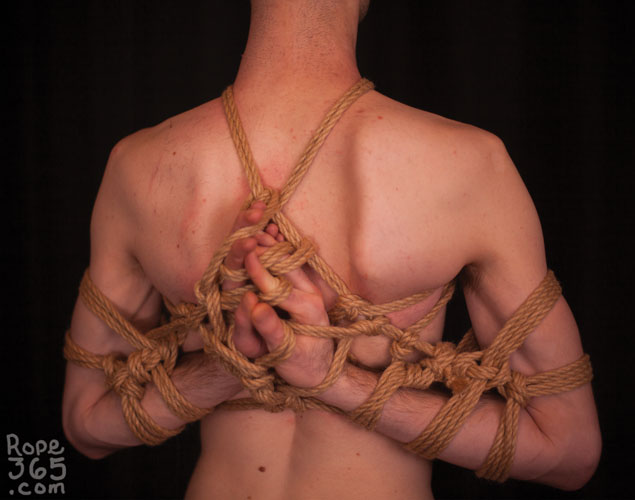
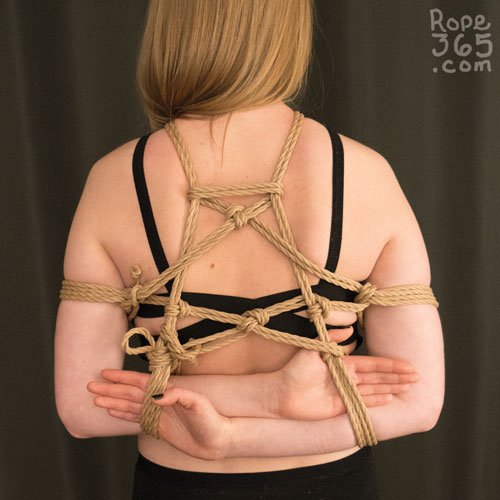
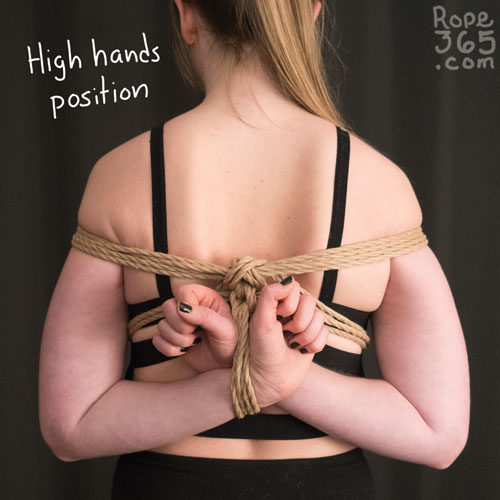
In Week 5 we dove into the box tie, a tie with the hands in the back. But there are many ways to bind the arms behind.
Bringing the hands in the back adds an element of vulnerability and helplessness. These positions challenge the body in new ways as they are not often used in daily life. Warm-up each joint, especially the shoulder to allow for maximum range of motion and prevent injuries. Every person has a different flexibility level and these poses will look different from person to person.
The goal of this week is to play with different positions that bind the hands in the back and learn to adapt to different levels of flexibility.
Activities
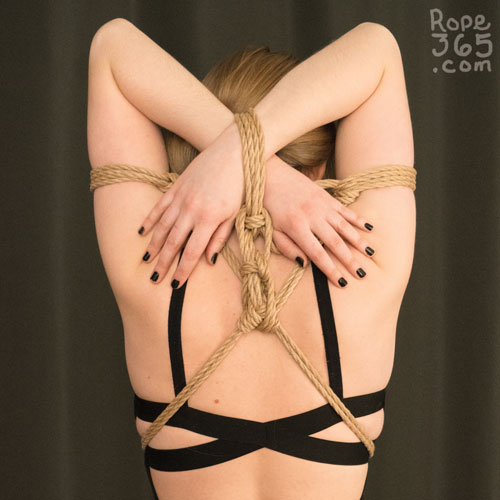
Day 99: Bunny Ears
Alt pillow tie, Waki Zarashi 脇晒し (exposed armpit) or Usagi ウサギ (rabbit). Tying the wrist behind the head will bend the elbow in the way that it creates two bunny ears above the head. There are several variations, wrists crossing, prayer hands, tying the forearms together or tying them seperately and joining the two bunny ears.
- Frog Tie – Assembling Ties by Rope365
- Usagi Basic by Yukinaga Max
- Wrists over Head to Back by Topologist
- Bent Arms Behind Head by Topologist
- Unlocked Double Elbow Tie by Topologist
- Bunny ears tie by Anatomie Studio
- Hands Up by Bondage Tuition
- Wrist Over the Head Tutorial by Rory’s Brainworks
- Wakizarashi shibari by 鵺神流
- 20’いまさら聞けない基本の手錠 by kamui jyubei
- Basic Pillow Tie by EpicRope
- Bunny Tie a.k.a. Pillow Tie by DeGiotto
- Over the Head Chest Harness by BoundJocks
- Overhead Harness by Watts The Safeword
- Consequence Rope Gag by Fetish Weekly
- The Spinout Munenawa by Innovative Fiber Arts
- Usagi shibari by Nawado
- Usagi by Shibariland
- Das Prinzip von Zug und Gegenzug by JOYclub Community
- The Bunny Tie by TheDuchy
- Bunny tie by Shibari Shamanism
- The Bunny Tie by Jay and Cay Shibari
- Photo by SaaraRei 1 2 3
- Photo by BigGuyPlaidShirt
- Photo by Odys
- Photos by Tho4ns 1 2
- Photo by The_Silence
- Photo by OsadaSteve
- Photo by Sauvage_x
- Photo by SeattleShibari
- Photo by Ordained_Images
- Photos by OliviaLyon 1 2
- Photo by BenHart
- Photo by WykD_Dave
- Photo by ShatteredPulse
- Photo by Tifereth
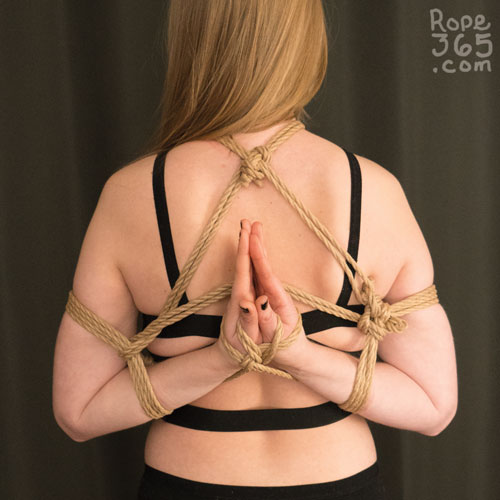
Day 100: Reverse prayer
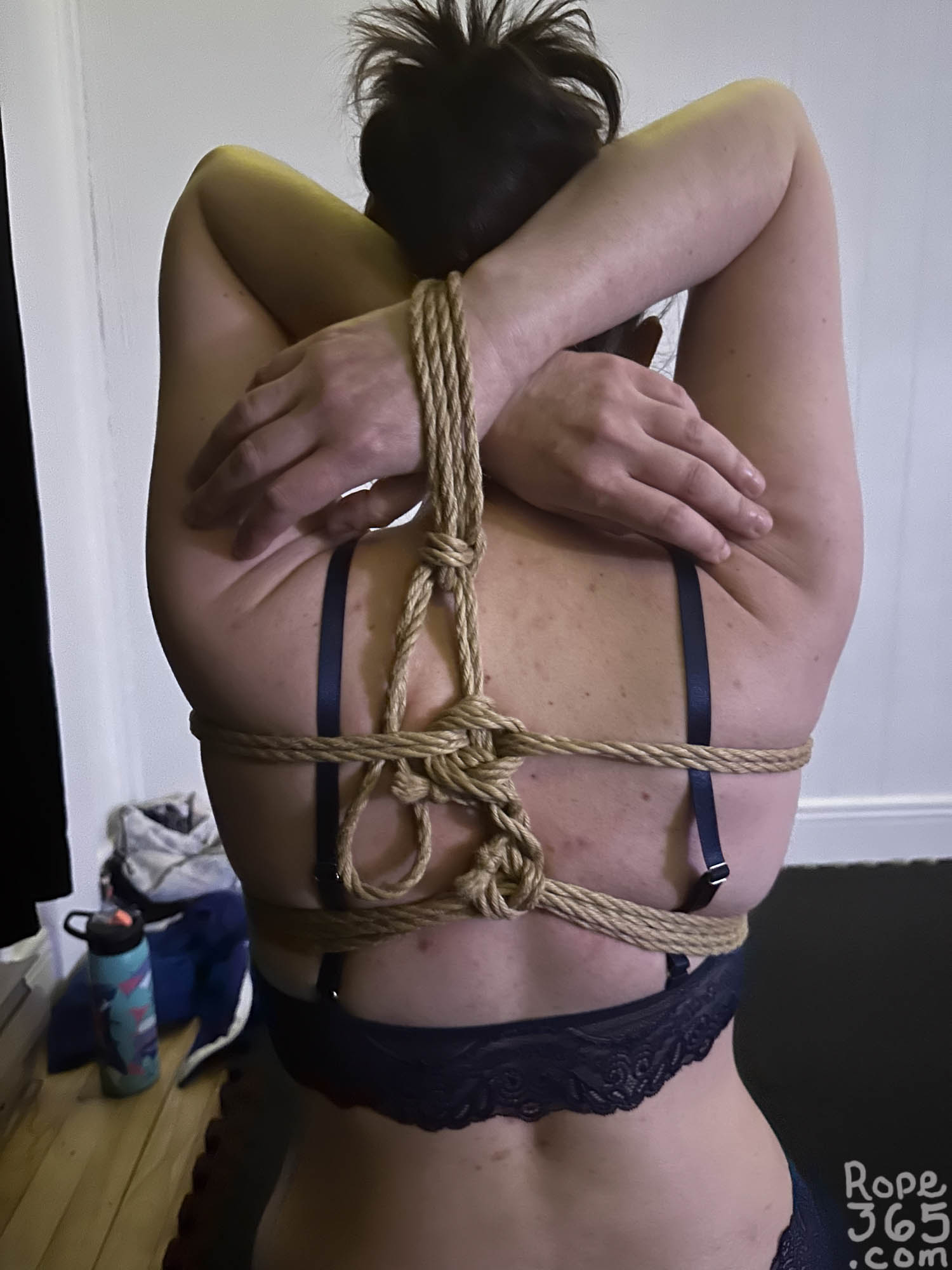
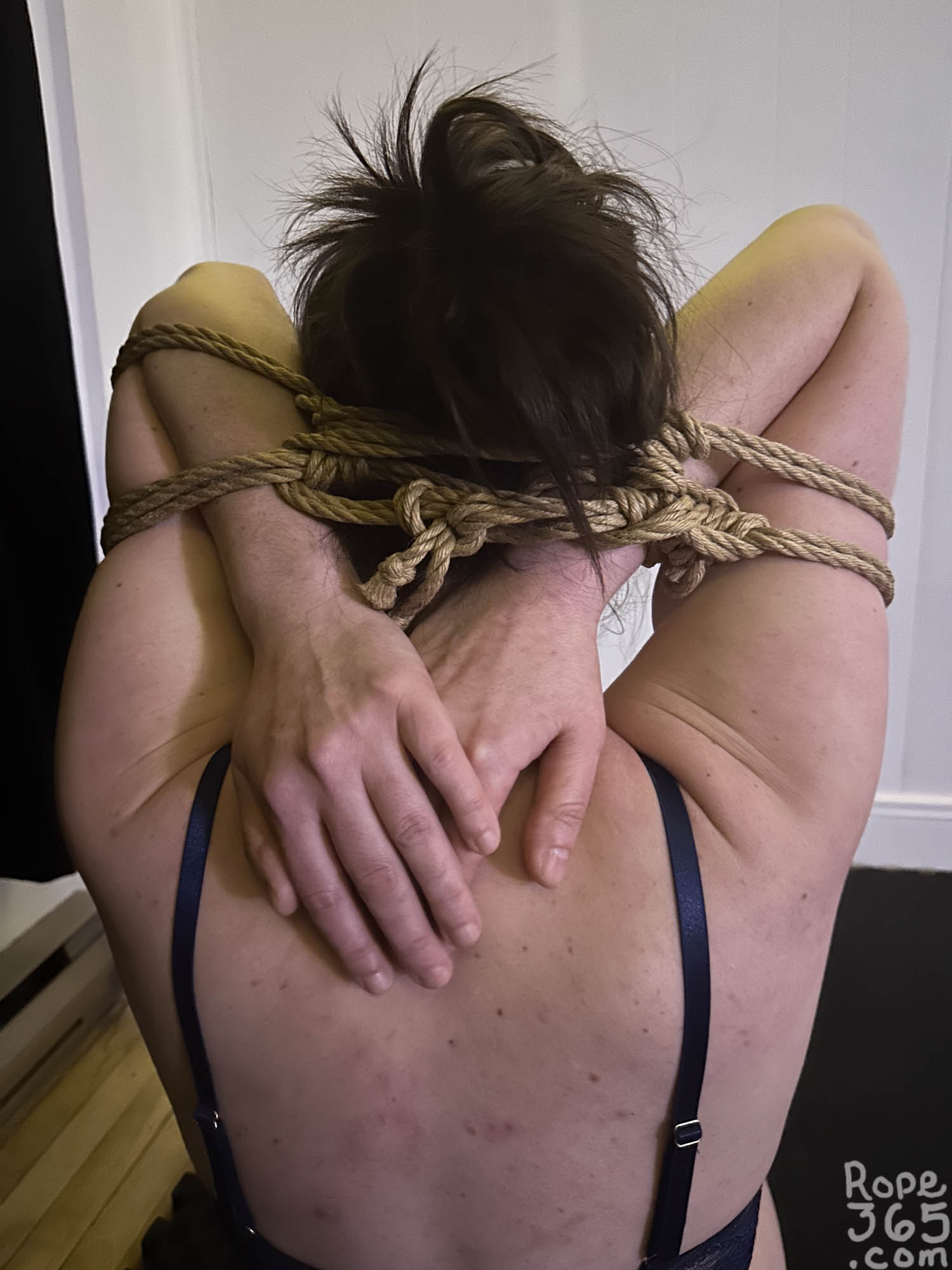
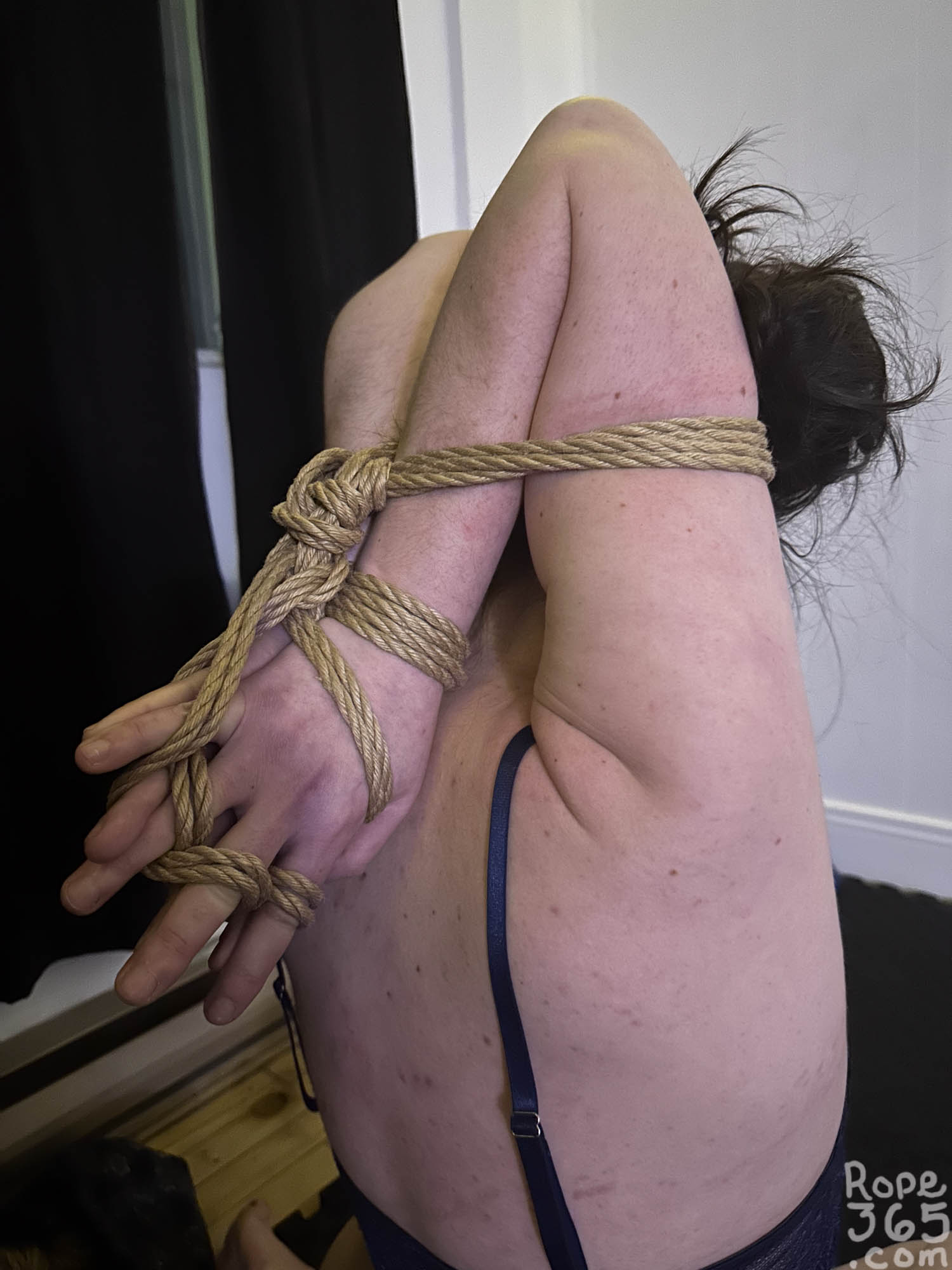
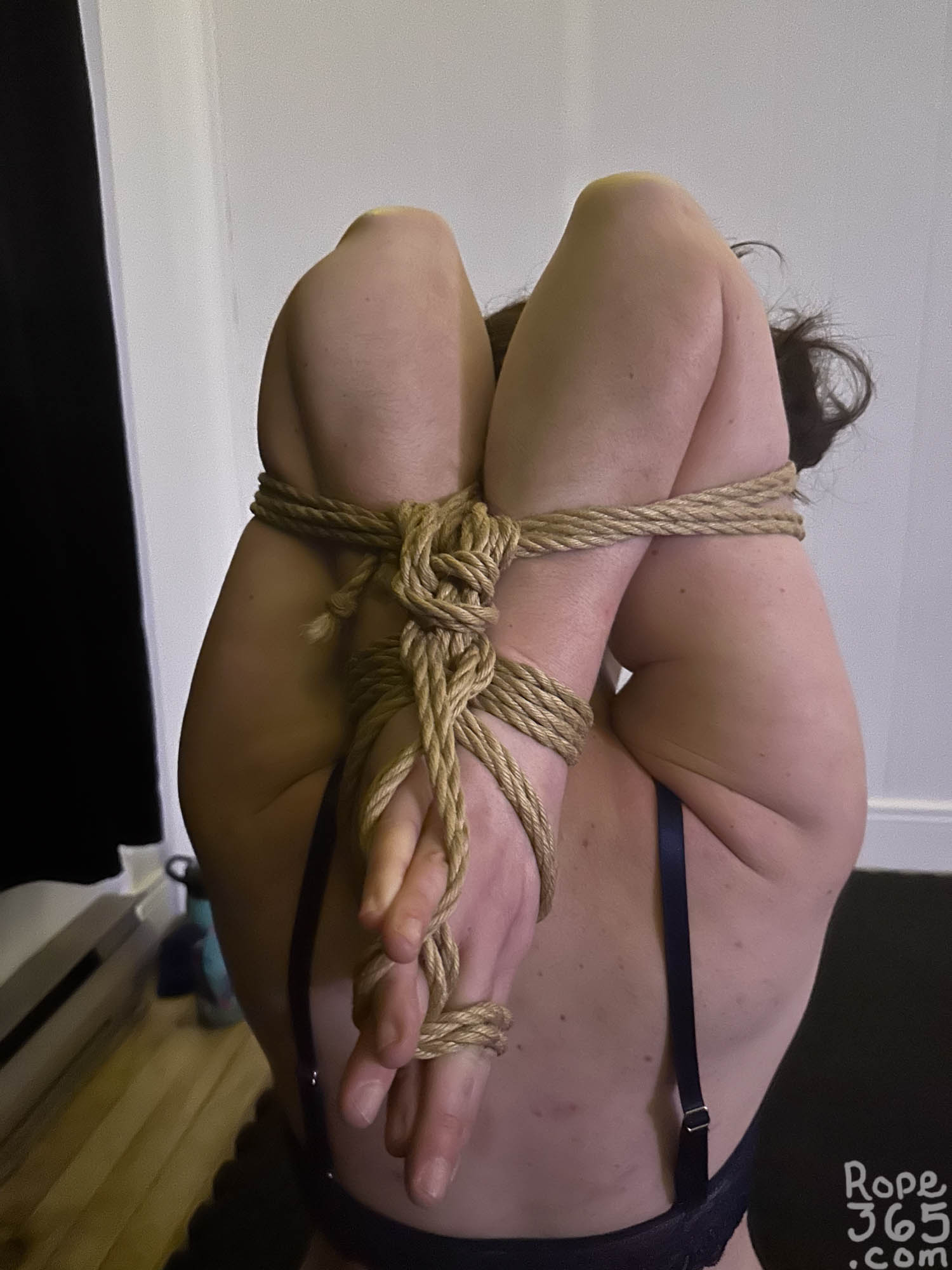
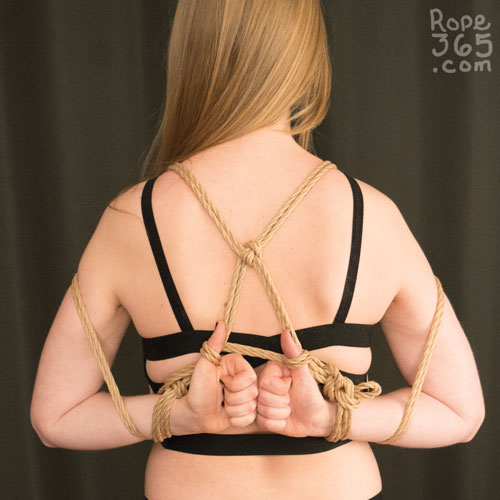
Alt ushirote kannon shibari 後手観音縛り (Back kannon tie, a Buddhist deity) in Japanese. The reverse prayer is a beautiful but difficult position. Few will be able to bring their hands very high up the back; most can manage to get their palms together, and many won’t be able to bring their hands together in the back. The angle of the elbow will vary a lot from person to person, depending on their flexibility.
- Reverse Prayer tie by Voudou Ropes
- Gotegass Reverse Prayer shibari
- Tutorial drawing by Veterinarian
- Photo by THL
- Photo by ButterflyBondage
- Photos by -EM- 1 2 3
- Photo by RopuNawa
- Photos by OsadaSteve 1 2 3
- Photo by GemToo-
- Photo by AllieBowString 1 2
- Photo by diabolicart
- Photo by Avalon
- Photo by samjay
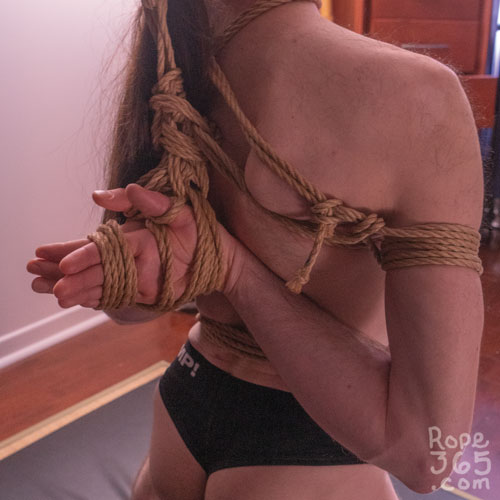
Day 101: Inverted Reverse Prayer
An unusual but interesting position is created by tying the hands together in the back with the palms facing out. This create different shapes from the usual revers prayer, including a position with the fingers pointing outward. A tutorial of this tie was documented in the book SM耽美文学別巻 SMプレイ (SM Play – You can play SM) by 浦戸宏 Urado Hiroshi.
- Coming soon

Day 102: Downward Reverse Prayer
Place the palms against each other in the back with the fingers pointing down. This is an interesting variation to the classic reverse prayer that is more accessible.
- Coming soon
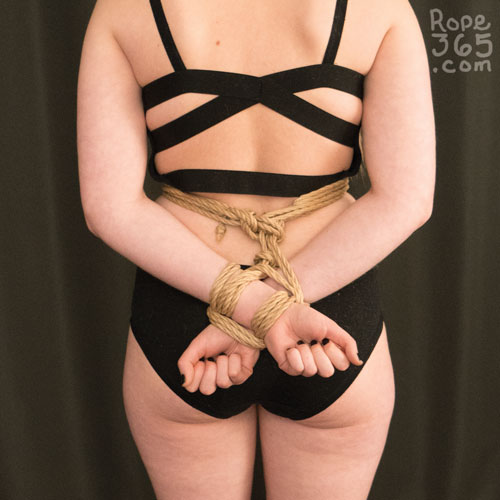
Day 103: Wrists to Lower Body
Tie the wrists to the hips, or crossing over the butt. Explore with pulling the wrists downward..
- Coming soon
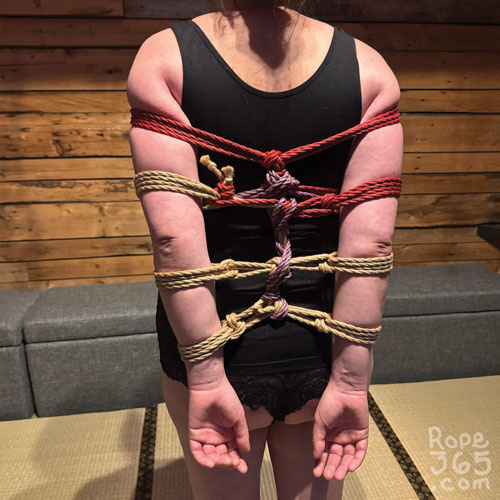
Day 104: Side-Arms
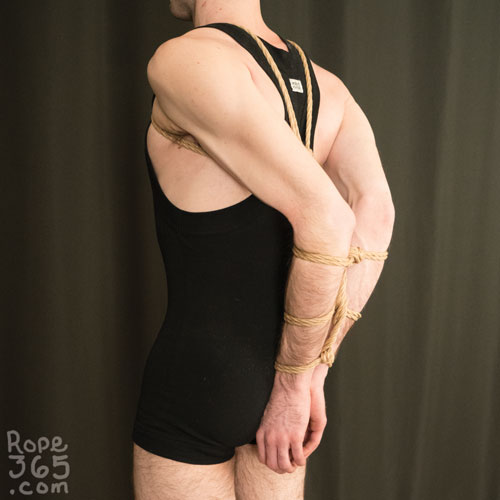
Bring the arms parallel in the back, but keep the arms separated. This is a good tie to explore before attempting the Strappado, which creates more pressure on the
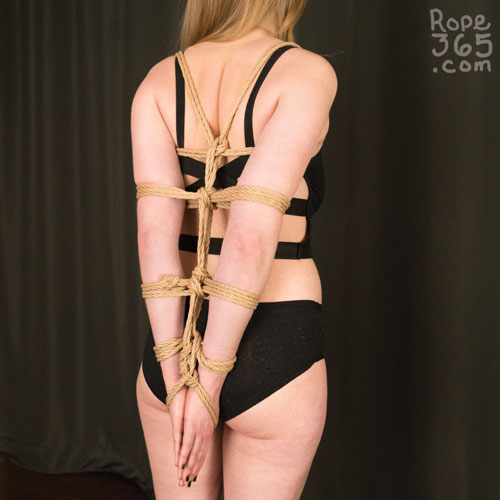
Day 105: Strappado
Aka armbinder. Tie the arms straight behind the back. Depending on flexibility, the arms can be apart from each other or elbows can be touching. This position can be difficult to maintain for a lot of people, and the Latissimus dorsi muscles are likely to press into nerves. Monitor the hands and make sure you can untie quickly, don’t hesitate to cut the rope with control in case of emergency.
- Ushiro Chokushin by Yukinaga Max
- Tasuki Gote by 鵺神流
- Ippon shibari by 鵺神流
- Basic Armbinder by Topologist
- Lace Up Armbinder Topologist
- Extra Strict Armbinder Topologist
- The Strappado by Innovative Fiber Arts
- Diamond Strappado Tutorial by Rory’s Brainworks
- The Dragonfly Harness by Rory’s Brainworks
- How to Tie a Dragonfly Armbinder by The Twisted Monk
- Dragonfly Sleeve by Two Knotty Boys
- Evolution Armbinder by SkorpionRope 1 2 3
- Arm Binder by BoundJocks
- Arm binders by Watts the Safeword
- Dragonfly Shibari Tutorial by Voudou Ropes 1 2
- One Rope Strappado Shibaril by Voudou Ropes
- 4 line Strappado Shibari Tie by Voudou Ropes
- Strappado shibari by Nawado
- Kagerou shibari by Nawado
- Rope Armbinder by Nawado
- Strappado quadruple rope by Nawado
- Kagerou by Nawado
- Photo by Ren Yagami
- Photos by ShatteredPulse 1 2
- Photo by Marcuslikesit
- Photo by Naturalturn
- Photo by Sirulean
- Photo by Veterinarian
- Photo by MissLee210
- Photo by MaillerPhong
- Photos by KnotNice 1 2
- Photo by -EM- 1 2 3 4 5 6 7
- Photos by Cannon 1 2
- Photo by NighwolfAJ
- Photo by Reiyne
- Photo by SarifkaMorgan
- Photo by OsadaSteve
- Photo by Sona
- Photo by EbiBex
- Photo by TheVanErotica
- Photo by se7enawa
- Photo by adair.alia
- Photo by RopuNawa
- Sketch by Maiitsoh_Yazhi
Review
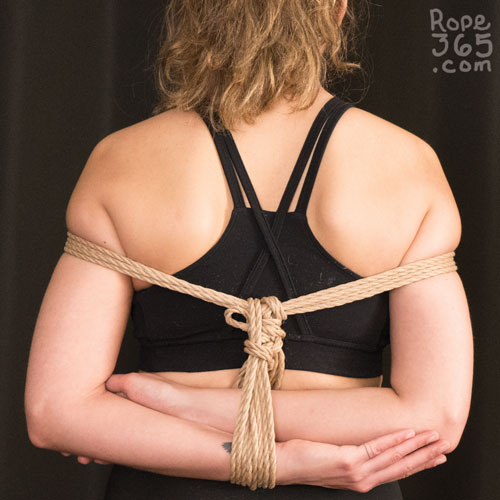
Wanna go back full circle with a study of hands in the back? Let’s go back to Box Tie and get a fresh look at it. Can you design your own? :
Video References
We compiled a YouTube playlist with various videos on this topic; let us know if you find any others we should add to it. Note that video references may display risky or unstable techniques; viewer discretion is advised.
Gallery



Inspirations and Resources
- Got more resource suggestions? Write it in the comments!
Or return to Summer for more options.