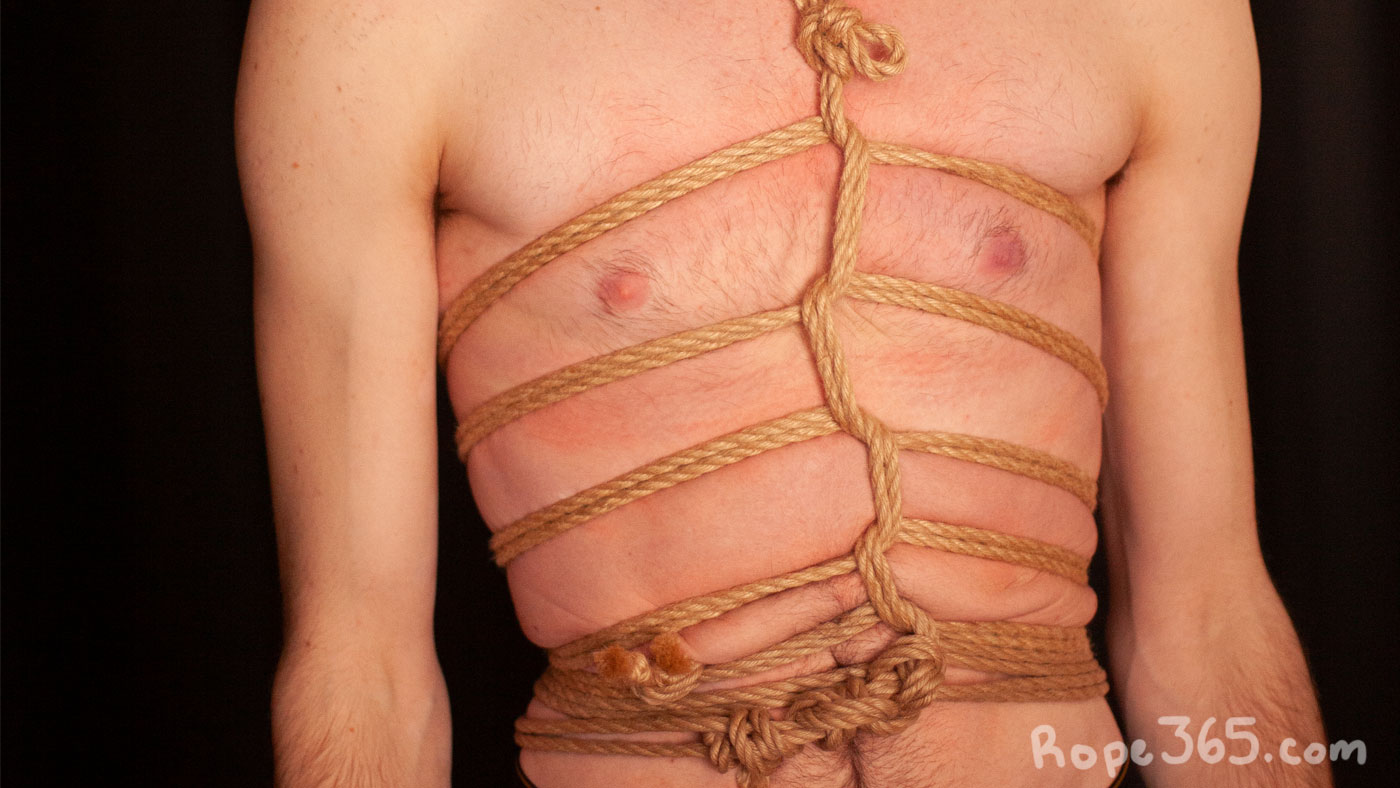
The torso is home to many vital organs. Breathing in particular can be affected by rope in many ways. For some people this can be a great sensation, for others, it is a discomfort that can lead to a panic reaction. Getting a better understanding of the internal composition of the torso and exploring your own tolerance with chest restriction can give you great tools to enhance your play sessions.
Torso and Breathing
Torso Anatomy
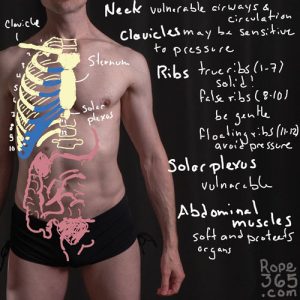
If we simplify, we can look at the torso in two parts, in the middle, along the base of the rib cage is the dome-shaped diaphragm muscle. Above is the thoracic region where we find the heart and the lung. Below is the abdominal region with more vital organs such as the stomach, the small and large intestines, the liver, the pancreas, the gallbladder, the kidneys, the spleen, the bladder etc. All these essential organs are protected by bones and muscles with the spine as the structure that holds everything in place.
The rib cage is composed of seven pairs of true ribs that are directly attached to both the spine and the sternum making them the most solid. Then we have five pairs of false ribs, three of them are indirectly connected to the sternum by cartilage, and the two floating ribs are only attached to the back. We have to be mindful of which bones we are tying on when we add pressure as true ribs are much stronger than their lower counterparts. In between those, the intercostal muscles. We also find several muscles connected to the arm and shoulder such as the pectoral, latissimus dorsi, trapezius, serratus anterior for a very strong upper chest.
The abdominal region is softer, with the spine and several layers of abdominal muscles protecting the organs. The strength of the abdominal muscles can have a great impact on the ties. Strong, engaged muscles will keep the body hard, while relaxed muscles will make the belly more malleable.
On top of all that, skin, fat tissues and maybe breast tissue. This adds up to what we can shape with the rope. Pressure might feel great, in other contexts, it might feel like an unpleasant pulling, different directions may feel completely different for the same person, and each person is unique in this aspect.
In the middle of the chest, right below the sternum, the solar plexus or celiac plexus is a cluster of nerves and ganglia that connects several organs. A blow to this region may cause spasms in the diaphragm muscle, which may be quite painful and interfere with the ability to breathe. This can be triggered when we combine shock and bulky knots on this spot. Rest and deep breathing are recommended in case of injury. On the spiritual side, this region is also known as the solar plexus chakra, the center of personality and personal power.
This is just an overview of the chest anatomy; check out the references to deepen your understanding of the chest.
Risks of Interfering with Breathing
Inhalation provides our body with oxygen while exhalation removes waste from our system. Different rope bondage positions and techniques will influence the ability to breathe of the person who is tied.
The risks of completely blocking respiration are very high. Brain damage can occur when the body is completely deprived of air for 3 minutes, and death can occur after 6-8 minutes. We can mitigate these risks by never fully restricting breathing.
Partially restricting breathing progressively increases carbon dioxide in the blood, which lowers blood pH (acidosis) and can cause headaches, dizziness, sleepiness, and an increased risk of seizures. Meanwhile, some research shows that slow, controlled breathing can actually be beneficial for the body. Some athletes do hypoventilation training to increase their physical capacity; this is not recommended for those with pulmonary or cardiovascular issues.
Should someone faints due to air restriction, immediately remove the obstruction, place them in a recovery position and contact medical emergency services if the person doesn’t wake up within a few seconds.
Certain physical conditions, panic reactions and emotional states can also cause hyperventilation. The person will start to breathe really fast. When someone exhales more than they inhale, it changes the balance of carbon dioxide in the body, affecting the blood circulation to the brain. This can cause tingling, dizziness and fainting. Because rope may combine breathing restriction and psychological impact, hyperventilation is more common than many other types of play. Should it happen, remain calm, remove the rope and from there you can try to get the breathing under control with techniques such as breathing in a bag, holding breath for 10-15 seconds, or belly breathing. Consult a physician if this doesn’t resolve promptly or is a recurring problem.
Communication can be a challenge when breathing is difficult. Make sure you have a way to signal problems besides using your voice such as tapping or dropping an object. Exploring slowly, and having regular breaks to check-in are great ways to mitigate the risks.
Ties made to restrict breathing should always be made in a way that they are quick to remove in case of emergency.
Respiration mechanics
The mechanics of breathing leverage some basic physic principles. When the volume of the thoracic region expands, the air pressure goes down which transfers the air to the lung from the outside. When the chest retracts, this causes the air pressure in the chest to get higher than the outside, which creates the exhale. The lungs don’t function as a vacuum, but rather like a bag that we fill with air by stretching it.
To achieve this motion, the diaphragm is the key muscle that controls breathing. It works in combination with other muscles to expand and contract the thoracic cavity. It can combine with the intercostal muscles to expand the top of the chest, this is often called chest breathing. Alternatively,we can use the abdominal muscles to use the belly breathing.
Other muscles are also involved in the breathing process. When using the intercostal muscles to expand the chest, the abdominal muscle will act as a stabilizer for the abdominal region and vice versa. The pelvic floor lifts and stabilizes the abdominal region and the voice diaphragm can contract to create a larger passage for air movement. Other chest, neck and back muscles can also contribute to expand the chest.
The mechanics of breathing can be both conscious and unconscious. Unlike our heartbeat and digestive system, we have some control over the rhythm of breathing, and which muscles we use. Inhaling is an active mechanic while exhaling is mostly passive. We can also contract the body to actively exhale, such as when blowing on a candle.
Beyond the chest, the air comes in from the upper airways via either the mouth or the nose and then travels through the respiratory tree to the lungs. We have to be mindful of obstruction that can occur higher up as well when breathing restriction is involved. We’ll continue to look at this part of respiration on Day 56.
[Coming soon, picture of chest and belly breathing]
Chest breathing – diaphragm down – chest expand with intercostals – Abs+pelvic floor stabilize – bonus back muscle open the chest even more
Belly breathing – diaphragm down – abs expand, pelvic floor stabilize, intercostals stabilize
Exhale – diaphragm up, chest retract, abs engage
Restricting Respiration with Rope
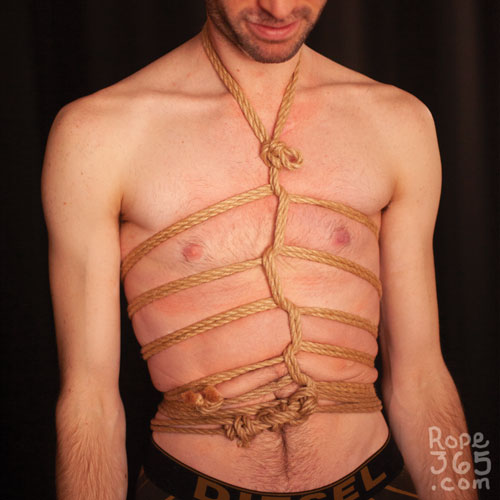
When we compress the torso with rope, tying the top of the chest will limit the use of intercostal muscles while tying the belly tightly restricts the abdominal muscle. Tying one will force the person tied to adjust their breathing and tying both will significantly reduce their ability to breathe.
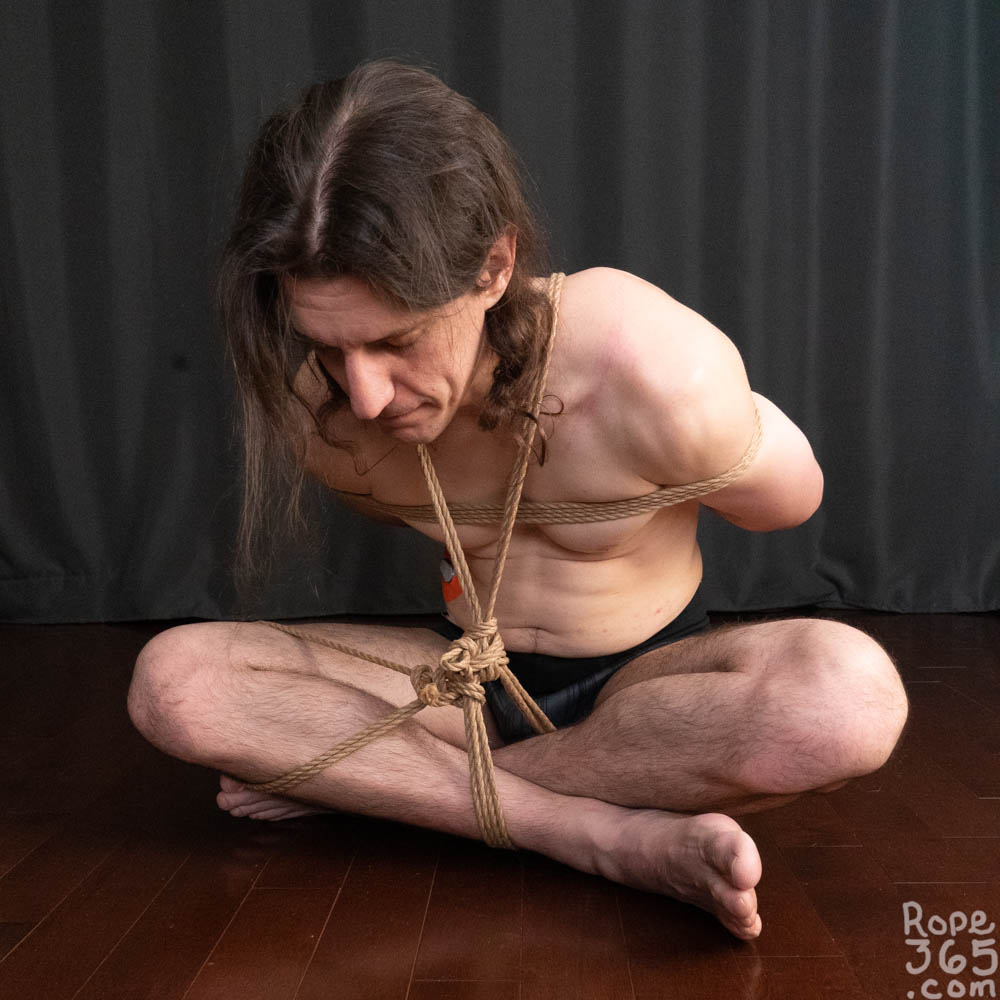
Breathing restriction can also be positional. When we bend forward, the organs in the belly get compressed against the diaphragm. When we bend backward and bring the arms to the back, the abdominal and chest muscles are stretched and it becomes difficult to exhale. This is why positions like the shrimp tie and the hogtie affect breathing, and this might be an important aspect of their popularity.
We can increase our breathing control with practice. It requires concentration, being present, in the moment and can become very meditative. I like to visualize the different muscles involved in the breathing mechanic when I do so. Normal-paced conscious breathing is good to regulate the body, and this is how we should breathe most of the time. Slowing breathing can have a calming effect, reducing the heart rate. Very rapid breathing can do the opposite and be very stimulating. We shouldn’t abuse slow and fast breathing as they have an impact on the levels of oxygen and carbon dioxide in the body.
Conscious breathing is important for both the person tying and the person being tied, it is quite common to hold our breath when we make a significant effort, which can cause unnecessary stress.
How you breathe can completely change a rope experience. It can also be very panicky to lose control over our own breathing. Explore progressively to find the limit of your own body and mind. Establish a communication strategy, and regularly take breaks to check in as it may be difficult to talk when we interfere with breathing. There is not a single perfect technique to breathe, and rather a variety of ways that we can choose among depending on context.
Neck
Any rope safety guide will advise against tying the neck, yet rope along the neck keeps on being quite popular. If the risks of tampering with breathing and blood flow are high, many people seek its potential for pleasure. The neck is a very vulnerable part of the body, we can explore these sensations by going gently to find our own limits. Having a better understanding of the risks and mitigation strategy can help us make better choices in our play.
Neck anatomy
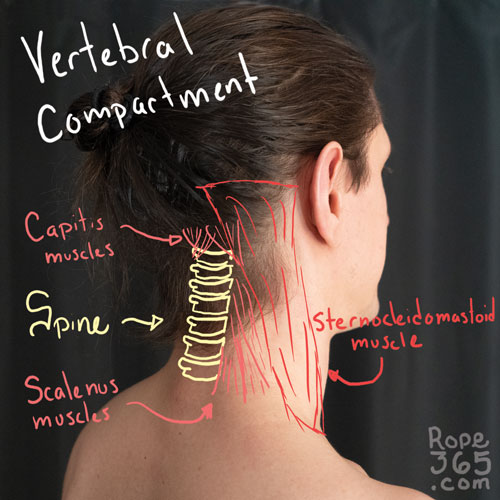
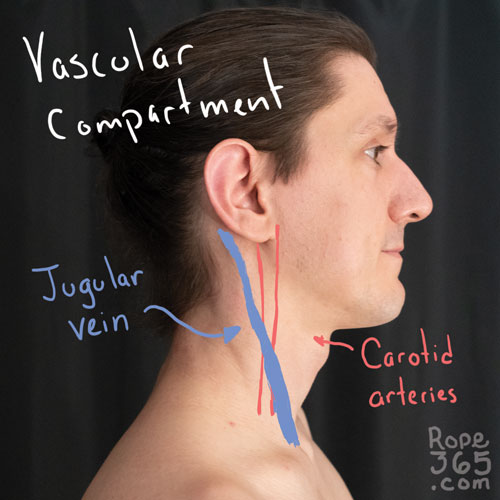
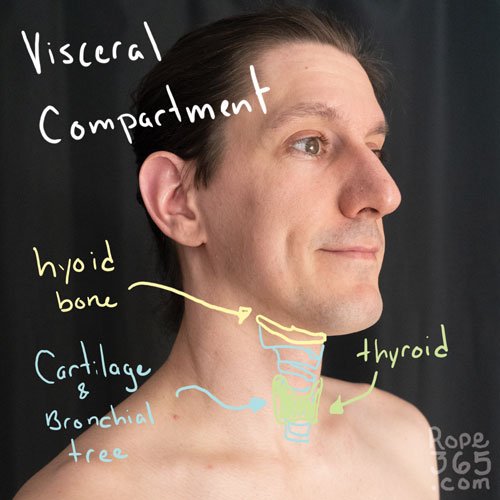
The neck ensures the mobility of the head and connects several vital organs. It is structured in four compartments:
- The vertebral compartment with the spine and postural muscles.
- The two vascular compartments with the carotid arteries, the internal jugular veins and the vagus nerve.
- The visceral compartment with the larynx, pharynx, trachea and several glands (thyroid, parathyroid, and thymus).
At the base of the mandible is the hyoid bone, the only bone of the body that is not connected to any other bone. This horseshoe-shaped bone serves as an attachment point to several muscles including the tongue, the floor of the mouth and the larynx. It plays a role in the tongue movement and swallowing mechanics. The main cause of hyoid bone fracture is strangulation and hanging. The consequence can go from mild discomfort to life-threatening respiratory distress.
The neck is protected by the spine and layers of muscle. The cervical vertebrae are the smallest of the spine. It is the most structural part of the neck but is vulnerable to shocks. The muscles of the neck are attached to the sternum, the clavicles, the hyoid bone and the skull forming triangles that allow the head to move in various angles and are involved in speech and swallowing. This structure makes the density of the muscle very different across the neck, leaving some parts more vulnerable than others.
The carotid arteries and the jugular veins run on each side of the neck. They are responsible for the blood flow to/from the brain and compressing these with rope can lead to brain damage and death. Baroreceptor nerves monitor the blood pressure in the arteries/veins. They do so by detecting stretching in the tissues and will signal for the heart to slow down if they detect blood pressure to be too high. We’ll dive deeper into these risks in the Choking and Risks section.
The larynx, pharynx, trachea are all important components of voice and respiration and mostly consist of cartilage. They are quite vulnerable to pressure and impact, and very slow at healing. Intubation or tracheostomy may be necessary procedures in case of heavy damage or obstruction.
This is only a summary of important anatomy information that relates to rope bondage. Check out the references for more details on neck anatomy.
Choking and Risks
We can learn more about the risks of choking with rope by looking at the use of choke in martial art, other combat sports and military techniques. Chokeholds can cause fainting in an average of 9 seconds. It will lead to unconsciousness and death if the hold is maintained.
Air choke compresses the upper airway and will lead to asphyxia. It is less effective as a choke, causes pain and air hunger, and presents a risk of fractures to the larynx and hyoid bone. Check back on Day 55 for a more in-depth analysis of air restriction.
Blood choke or sleeper hold, compress one or both carotid arteries and/or the jugular veins, and require very little strength. It causes cerebral ischemia and a temporary hypoxic condition in the brain. The mechanics of blood choke are not fully understood. The main theory is that baroreceptors detect stretching in the artery/vein, falsely detecting an increase in blood pressure, then sending the message to the body to slow down. If released immediately, it can cause unconsciousness for 10-20 seconds. But if the hold is maintained beyond 20 seconds, it can cause injury or death. Examples of injury include short-term memory loss, damage to the retina, hemorrhage, permanent brain damage, stroke, seizures, or coma.
In case of fainting, place the person on the ground in the recovery position and contact medical emergency services if the person doesn’t wake up within a few seconds. See Day 55.
The wide use of choking in different fields shows that if released immediately, there are little to no long term consequences to the brain on a healthy adult, but it might be different from someone with a heart or blood pressure condition, or younger people where the nervous system and heart development has not completed. Neck problems caused by the impact of the choke is a common injury from choking in martial art.
Another important aspect of choking is consent. Non Consensual choking can be a very traumatic experience, and many people have triggers related to the neck. It is important to be fully aware of the risks to give informed consent. Even with consent, if something serious happens, the law will still hold the person inflicting the choking responsible. Good communication, going slowly, and taking breaks for check-in are great ways to mitigate these risks.
A big difference between the chokehold and neck rope play is that releasing is not instantaneous. Any rope that is fixed in place, or that might tangle up represents an immense risk considering only a few seconds of choking can lead to death. Having a cutting tool ready on yourself may help, but unless you have a single strand of rope to cut, it will take more than a few seconds, especially if the person is unconscious. Using quick release and exploding knots may be a faster alternative, but they aren’t completely safe as they still require time to untie, and may tangle or collapse in the process.
Of course, none of these mitigation strategies work if you are alone. Fainting can happen very quickly and if the restriction is not immediately removed by a spotter, the irreversible is highly likely to happen. A safety call or video monitoring will not be able to get help fast enough. Solo neck rope is the highest cause of bondage death every year, please be safe.
Sudden pressure or shock is also something to be mindful of when playing with the neck. Unexpected movement can create instant damage on the more fragile part of the neck, especially the cartilage in the front and the hyoid bone. This is more likely to happen if a rope connects the neck to something else, such as another part of the body, or a hardpoint.
That said, not all rope touching the neck will cause an immediate choke. Businessmen can wear ties all day without fainting. The location of pressure and how much tension is involved will change how long it will take before reaching the point with real consequences. How many parts of the neck are compressed at the same time will also make a difference. If blood circulation is tampered with on one side, but the other side remains free, the brain will not be fully deprived of circulation. Hypoxic condition in the brain and fainting may still occur but at a much slower pace.
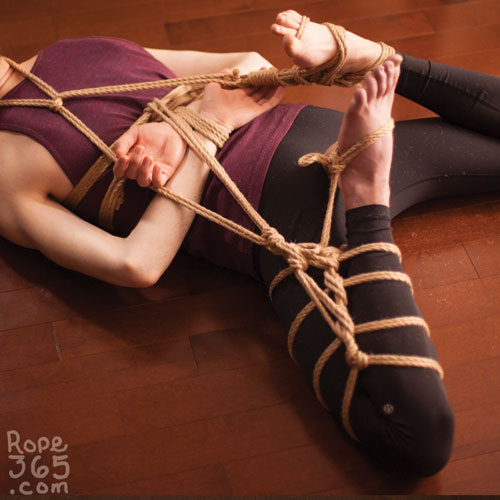
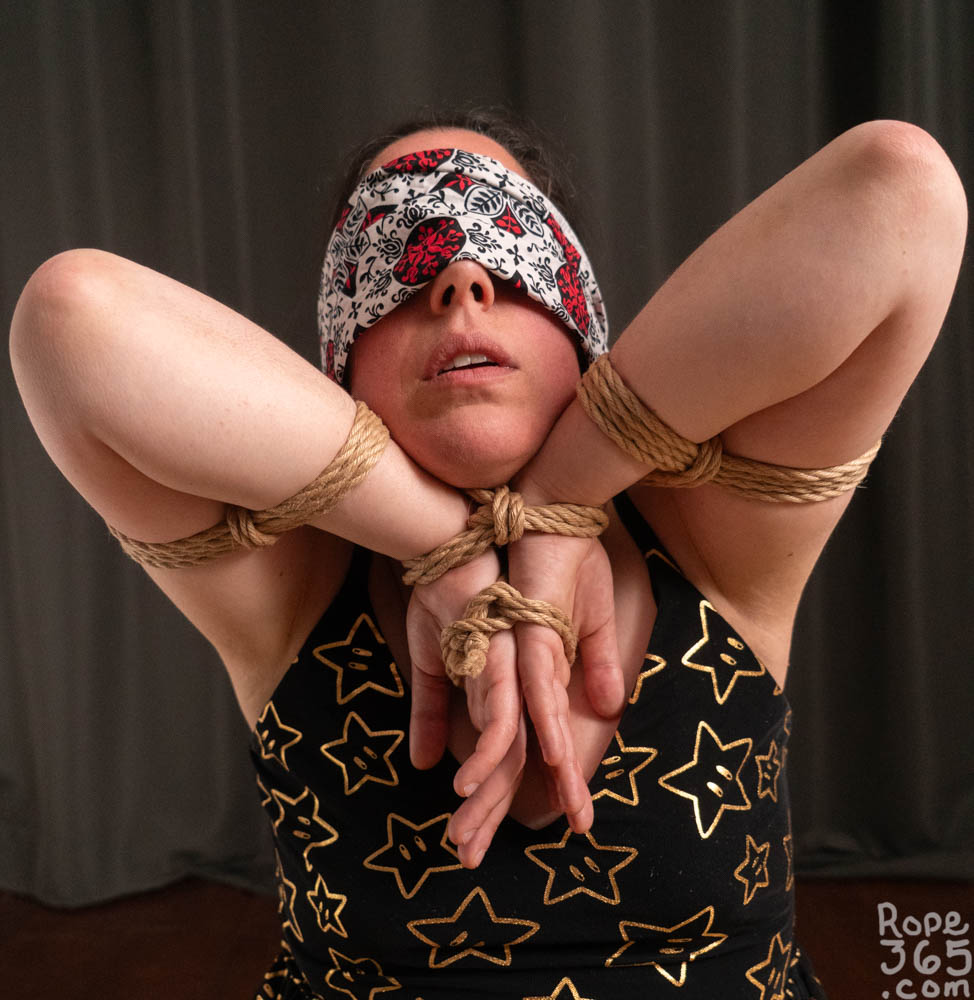
Not all choking in rope bondage comes from rope directly on the neck, it can be from a partner’s touch or even the body of the person being tied pressing against their own neck.



[Coming soon asymmetric pressure]
Playing with the Neck
Let’s mention it again, the risks of playing with the neck include death, permanent injury to the brain and to the neck itself. That said, the likelihood of those risks with gentle pressure on the neck is quite low.
We can start by exploring our own neck with our fingers, gently pressing the different parts. Feel how the front and side of the neck require very little pressure to feel discomfort, and how the top part under the mandible, the base of the neck and the back are a bit more protected by muscles. We can put a finger in the little dip at the base of the neck in the front which is a very vulnerable spot. Try to engage the neck muscle to feel the difference and notice how this can protect the neck.
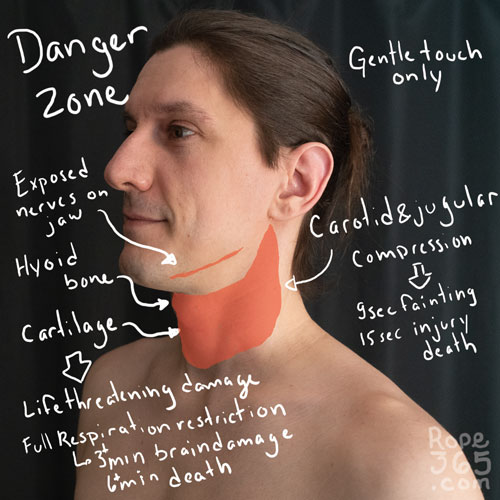
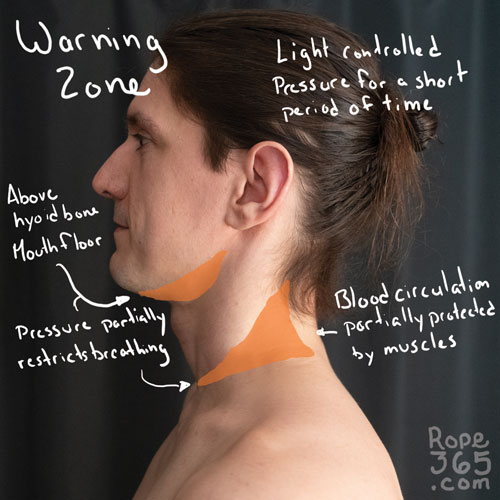
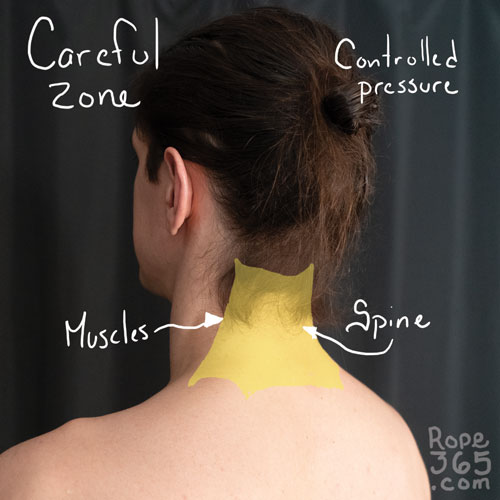
Using rope as an extension of your hand is a great way to use rope on the neck in a controlled way. We should be putting less pressure than we would be comfortable putting with our own hands as we don’t have the same level of feedback and control. Holding a piece of rope with two hands and using the part in between to caress the skin can be very erotic, and plays with the vulnerability of the body.
From there, should you want to explore with adding more pressure, and/or wrapping fully around the neck, you enter more dangerous territory. Make sure to discuss the plan with your partner, avoid the danger zone, stay in control, always have a way out that can be executed in seconds. Take breaks to check in on each other, and explore very progressively.
[Coming soon, picture gentle rope play with the neck]
Practice Time!
Use a rope to progressively add pressure on the torso to find the limits of discomfort and explore how this affects breathing.
You can start exploring neck restriction with just your hands at first to get a precise understanding of what feels good and what is too strong. Fold a rope to have a large band of 4-8 ropes and use it as an extension of your hand to caress the neck and progressively increase intensity. Avoid using knots so you can remove the rope at any time.
Exploration ideas
- Try at different locations (upper chest, mid-chest, floating ribs, belly)
- Try different methods to add tension in a chest harness: reverse tension, adding tension to previous ropes, inserting objects etc.
- What happens when several parts of the torso are compressed at the same time? (upper chest, shoulder, waist)
- Have the person tied up attempt to breathe using different accessory muscle,
- Try communicating in different ways to signal a problem (voice, tapping, hand signal, head movement etc.)
- Does it make a difference if you apply the compression when the lungs are full or empty?
- How does engaging the muscle affect breathing?
- Try different body positions, bending in front, back bending, how does it impact the capacity to breathe?
- Is there a point where the amount of pressure makes the experience unpleasant?
- Explore your neck, and your partner’s neck with gentle touching with your fingers, hands.
- Try drawing the important parts on the neck such as the spine, muscles, veins, arteries, hyoid bone, larynx etc.
- Compare the effect when putting the rope at the base of the neck near the collar bones vs higher close to the chin.
- Touching with a rope, compare the sensations on the front vs on the back, vs on the side.
- How different is the sensation between a single rope, and several ropes touching the neck at the same time?
- Engage the neck muscles, how does that change the experience?
Solo variation
- It is safer to play with solo chest compression if you have someone with you in case of an emergency. If you don’t, make sure you keep some space for breathing.
- Beyond gentle touching, do not explore this alone! You can still self-tie and have someone look over you as a spotter.
Inspirations and Resources
- Can Choking During Sex Cause Brain Damage? By Compassion Sadist
- The Neck Thing (TNT) by Neuromancer
- Bondage and Positional Asphyxia by Jay Wiseman
- There is no safe way to choke someone by dominantdiscourse
- How Safe is Choking in Judo? By Judo Info
- Control of Breathing by Rebecca Dezube
- Change Your Breath, Change Your Life by Lucas Rockwood
- The Science Of Yogic Breathing by Sundar Balasubramanian
- The physiological effects of slow breathing in the healthy human by Marc A. Russo, Danielle M. Santarelli, and Dean O’Rourke
- The Science of Breathing by Sarah Novotny and Len Kravitz
- Why Am I Having Trouble Breathing? By Judith Marcin
- What to Know About Hyperventilation: Causes and Treatments by Debra Sullivan
- Breathing on Wikipedia
- Hypoventilation on Wikipedia
- Hyperventilation on Wikipedia
- Dangerous by Nawakiri Shin (incident report)
- Neck on Healthline (try the layer slider)
- Neck anatomy by Jana Vasković
- Organisation of the Neck by AnatomyZone Part 1 Part 2
- Chokehold on Wikipedia
- Hyoid Bone Fracture: Associated With Head and Neck Trauma—A Rare Case Report by R. Keerthi and Abdulhaseeb Quadricorresponding
- QLI Anoxic-Hypoxic Brain Injury Webinar by Jeff Snell PhD
- Anatomy, Head and Neck: Carotid Baroreceptors
- Effects of hypoxia on the brain: Neuroimaging and neuropsychological findings following carbon monoxide poisoning and obstructive sleep apnea
- Picture by SaaraRei
Or return to Anatomy and Mobility for more options
Credit:
Leave a Reply