Many online forums, such as Fetlife’s shibari group and Reddit’s r/shibari, are great for asking questions. This page compiles the most frequent questions with short answers and some links to dive deeper if you wish.
Learning and Experiencing
Some of the most common questions, especially the ones asked by people early in their rope journey.
What is rope bondage and why are people interested in it?
Using rope to touch, move, and restrict the body lets people explore a wide spectrum of sensations and emotions. For some, it is simply an act of decorating the body for aesthetic exploration; for others, it is a profound act of emotional connection and intimacy. Rope is just a tool; it can stimulate pleasure or pain, possibly both at the same time. It can restrict the body, possibly to free the mind!
The words shibari (to tie) or kinbaku (tight binding) usually refer to Japanese-inspired rope bondage, which tends to combine a few simple elements to create more complex ties in an organic way.
Check out more about what rope is on the Learning Rope Bondage page.
How do I start learning how to tie?
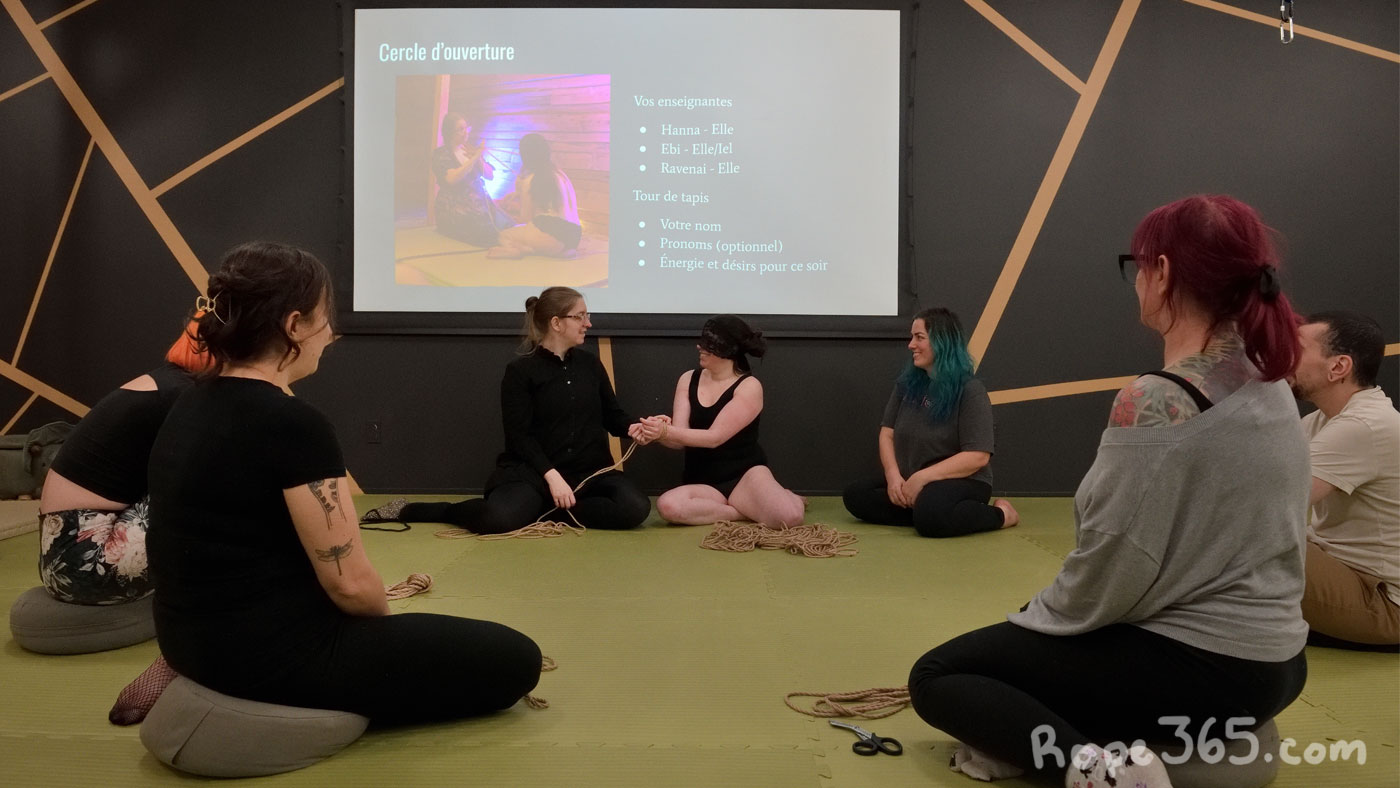
The best way to learn is in person with a skilled teacher. Ideally, someone who shares your intentions and preferences. Depending on where you live, you may have several options nearby, or you may have to travel a little. If you are not comfortable taking group classes, the same teachers usually offer private classes for a higher fee, but with a customized experience.
You can also learn from many great books and online resources. It is important to understand that these mediums are limited, as some foundational techniques are best learned in person, such as body manipulation and tension. Imagine learning how to dance or martial arts from a book. That said, these are great resources for tapping into the diversity of the rope community and discovering a variety of styles.
Some resources to look into:
I just want to be tied; do I need to know anything?
There is an important core of knowledge that is essential no matter your role in rope, such as communication strategy and safety. As a person in rope, you completely share the responsibility of your well-being. This includes risk prevention, negotiation, making sure your partner is compatible with you (intentions, communication style, and preferences), and communicating during and after the tie.
Some resources to look into:
From there, you can develop different skills, including body awareness to experience rope in a safer and more sustainable way. Quality rope classes will generally have important knowledge sharing for both the person in rope and the person tying. You may never have to learn how to do the knots as the person in rope, but recognizing a safe technique from an unsafe one is critical if you enter higher-risk ties.
People starting in rope often seek suspension. It is important to know that it is a high-risk activity that requires significant knowledge from the person in rope to mitigate potential problems. It is generally not advised for beginners. Suspension that involves tying arms and using complex harnesses should come with an intimate knowledge of nerve injuries and self-checks. As a person in rope, you should also have a comprehension of what safe equipment is and its correct usage to ask for adjustments if necessary.
How do I get started with self-bondage?
Self-bondage has different interpretations, and each has its own path. Some good books and online resources also exist. Some prefer to explore self-bondage with devices like cuffs and timed release, while others prefer to use rope as a form of self-expression. Self-suspension has also developed as its own form of aerial art. No matter which type of self-bondage you want to explore, make sure to inform yourself on the risks specific to the type of practice you do.
It is important to state first that self-bondage is the most dangerous form of bondage, with the largest number of death records1, most of them from tying alone and adding some form of breath restriction, including neck rope, forward bending (shrimp/ebi position) or backbending (hogties). For a safer approach, one can keep it to lower body ties or have a spotter, someone who will intervene if something goes wrong.
Back to the question of learning: just like with partnered tying, learning in person in a community will allow for a safer approach and deeper discovery of the practice. There are also many great books like Shay Tiziano’s, plus online resources to help you out. Most of the Rope365 curriculum can be done self-tying.
Some resources to look into:
- Finding a Local Community
- Books
- Online
- So you want to get started with self-bondage by Ebi McKnotty
- Self-Bondage Safety Intro
What books do you recommend for learning?
What books will be best for you will depend on your interests and preferences. Depending on whether you mostly self-tie or tie with a partner, and whether you prefer a Japanese or Western aesthetic, some books will suit you better than others. Also keep in mind that books can’t fully showcase key concepts like tension and body manipulation. I have included my top recommendations on the Books page, along with my entire collection of rope bondage books.
You may want to follow Rope365 on Patreon, social media, or via our newsletter to hear about the upcoming Rope365 book!
How can I meet a partner to tie/be tied?
The best way to meet people to do rope is to attend rope events. Most communities have rope jams or other social events that are friendly for solo people. From there, it’s a bit like making friends or dating. It’s up to you to introduce yourself, be your best self, and be curious about others. This will take patience, since relationships take time. Volunteering to be a class partners is a great way to deepen relationships in a safer environment. Don’t be afraid to ask around to see whether the person has a good reputation and whether their style is compatible with yours. Check the Finding a Local Community page to find people near you.
If you prefer to pay for a rope experience, some professionals offer it, but it is usually on the expensive side. Ask for references, as just because someone offers the service doesn’t mean they are safe or competent.
Kinky social websites, such as Fetlife or other online dating apps and websites, can be used to meet people with a higher degree of risk. This is increasingly more dangerous for someone just starting without the network of a community that will warn you of people with a history of consent violation and/or unsafe practices. Rope comes with a lot of vulnerability, and the internet’s anonymity makes it easy for bad-faith actors to prey on less experienced people. Ask for references, meet in a public space first, set a safety call (someone that will know where you are and intervene if they don’t hear back), and most importantly, take your time. Patience is the most important tool to meet the right people.
What rope should I buy?
Which rope to use is highly subjective. There are many options, and the best one depends on your intention, style, and other preferences. Different schools and learning resources will generally recommend what works best for their techniques.
You’ll want to avoid rope that contains toxic chemicals, is so stretchy it can cause a tourniquet, and/or has an unpleasant surface to the touch. If you have access to a local community, it is great to try different types of rope and ask people what they like or don’t like to form your opinion.
You can read about the different options and their pros and cons in the Rope Shopping guide and dive deeper into each characteristic in Rope Properties and Care.
I’m not sure if I can tie/be tied because I am big/male/gay/old/trans, etc.
You are enough! Seriously, people of all ages, sizes, ethnicities, sexual orientations, and genders can experience rope. That said, being a minority, you may find less representation, experience different forms of discrimination or have a harder time finding a compatible partner. More and more people online are sharing their experiences to help with representation. Ideally, rope groups are welcoming to all. In larger cities, you may find groups dedicated to some aspect of diversity to help everyone feel safe, such as Hitchin’ bitches (women who tie), BIPOC meet-up (black, Indigenous, and people of colour), men’s rope night (men who tie men), TNG (for younger people), etc. If these don’t exist in your region and you wish it did, you can contact organizers in other cities for tips on starting your own.
I’m not sure if I can be tied because of a medical condition.
Rope is an incredibly adaptable medium, and you can find variations for anyone. Seek out whether the condition has movement or body pressure limitations and work on a solution from there. Your medical professional is the best place to start. You can use aerial yoga or martial arts as a descriptor if you’re not comfortable talking about rope. Don’t be afraid to ask a teacher or experienced peer for adaptation ideas. Check out the Medical Conditions page for more tips and resources.
How can I practice without a partner?
You can absolutely learn the basics of rope and the different building blocks by tying yourself. This has the added benefit of learning the feeling of rope at the same time. Self-tying is a practice in its own right, with its own unique challenges and possibilities. Most activities on Rope365 can be done or adapted for self-tying. See “How do I get started with self-bondage?” for more resources.
To practice more complex forms, some people use a chair, a mannequin, or a long-sleeved shirt filled with pillows and towels. While these are great for exploring the technical aspects of patterns, keep in mind that you miss out on the feeling of the tie. More tips and ideas on tying objects in the crafting section.
Does it have to be sexual/erotic or violent?
Rope doesn’t have to be sexual, nor erotic, nor violent. It’s your choice whether to include each aspect of the practice in your play. It is also your responsibility to make sure the person you tie with shares the same interests.
It is important to honour the practice’s origins in erotism and BDSM. Censorship on online platforms often creates a distorted image of rope as a purely aesthetic practice, which it can be, but it doesn’t represent the craft’s diversity.
What does the word … mean?
The jargon of rope can often be difficult to navigate. Many different words are used for roles (top, bottom, bunny, rigger), techniques (column ties, kannuki), and tying patterns/positions (TK, futomomo, hogties). To add to the complexity, several words can have the same meaning, and others can mean different things by region, and this changes across languages. The Vocabulary section of Rope365 tries to cover the most common terms to help you navigate this, with links to other vocabulary resources to expand your perspectives.
Where does rope bondage come from?
This is quite a complex question. We know humans have used rope to capture and transport prisoners for thousands of years across many civilizations. But when did it get sexy? When did it get consensual? The invention of photography and improvements in printing technology allowed the first hints of documentation. In France, we find bondage pictures from the 1890s (Jeandel) and kinky drawings from the 1930s (Carlõ). In Japan, Itō Seiu (1882-1961) was a pioneer who inspired many others with his paintings and photography of bound women. Many American photographers and artists (Irving Klaw, Betty Page, John Willie) from the 1950s onward contributed to the damsel-in-distress trope we still see in movies today. The overall origin of bondage is a patchwork of different artists and their culture, influencing each other.
Rope-based martial arts such as Hojōjutsu are considered an indirect ancestor to rope bondage. The practice didn’t evolve directly from the martial arts, but also through theatre and paintings, representing prisoners, and creating the erotic fantasy of capture and torture.
This summary is a simplification of an incredibly complex topic; check out more references on these pages:
Suspension…
Most people asking about suspension are beginners, often impressed by pictures or performances. The early obsession with learning suspension often ends in disappointment, as the knowledge and skills required to mitigate the higher risk are quite high compared to the reward of the experience. When your brain is focused on technical aspects and filled with fear, it’s hard to focus on the fun. Keep in mind that rope suspension is just a tool in the practice. Slowly integrating suspension into your practice, without trying to be completely off the ground, will yield better results than rushing into complex suspensions.
How can I get started with suspension?
The absolute best way to learn suspension is in person with an experienced teacher. Rope suspension carries risks with high impact and high occurrence, and it takes a lot of knowledge and skill to mitigate them. Having someone experienced to share their wisdom and correct you on the go completely transforms the experience.
Suspension classes may not be available near you. That was my situation when I started. But even if no one was there to teach us, we didn’t learn suspension alone. Gathering with a group of rope enthusiasts, we learned together, spotted each other, and spent a lot of time researching every piece of information we could find before attempting anything. Even with all this effort, we still had more incidents than we would have with proper teaching. I ended up travelling for rope education and bringing experienced teachers to our town so we could learn properly.
Some resources to look into:
How do I install a suspension point?
The suspension point is a single point of failure with catastrophic impact if not installed properly. Depending on the building’s construction, the method for creating a safe anchor will differ. The short answer is that if you don’t have the technical knowledge to make load-bearing assessments, it’s better to hire a professional or use a freestanding structure.
Always keep in mind that movement creates additional forces when calculating weight-bearing capacity. Usually you want the rating to be (weight of the person(s) suspended + weight of the person suspending) x10, to take into account dynamic forces.
Also, if you learn suspension from a qualified teacher, they will likely have resources for you and may be able to refer contractors.
Some resources to look into:
What equipment should I use?
My strategy is for all equipment that is out of reach and/or a single point of failure to be rated for human load. Climbing gear is great because it’s designed to handle higher forces than rope suspension and is regularly tested. Construction safety equipment and boating equipment are also sometimes rated for human load. Be careful of low-cost knockoffs; they may have the certification printed on them without the proper tests and are known to fail catastrophically.
The equipment used for the rope on the skin and suspension line varies by style. Some schools have more redundancy; others rely on stronger materials such as nylon or Posh. More static styles close to the ground don’t have the same requirements as dynamic aerial art. A qualified instructor will recommend what works best for their style, and it requires deep knowledge of the techniques before mixing and matching different styles in a safer way.
Some resources to look into:
Is this harness suspendable?
The short answer is that if you need to ask the question, you probably shouldn’t suspend with it. A key skill in suspension bondage is being able to assess whether something is load-bearing and how it can be used safely. A skilled teacher should be able to explain the structures they use and teach, what makes it suspendable, and the limitations.
Exotic practices
Different ways to explore rope also have their own risk mitigation and technical challenges. Here are a few frequently asked about:
How do I tie to bamboo and other objects?
Bamboo, poles, and other pieces of furniture are great tools for creating alternative body restriction. First, reflect on how hard objects can dig into nerves or create discomfort when pressed against harder parts of the body, such as the front of the calves.
When tying on the object itself, a clove hitch is a great starting point as it is fast and tightens for a good grip. From there, lashings are great techniques to tie the objects and the body together. From there, it is up to your imagination. You’ll find several inspiration sections on Rope365:
How to tie to a vertical post (hashira) or a tree?
Using a structural column to tie to is another way to create fun, restricting positions, but it’s infamous for people fainting in the ties. Plus, in an emergency, the post gets in the way and makes untying slower and harder. Pressing against the post makes self-adjustment difficult and requires more precision from the person tying and more body awareness from the person in rope.
Vertical post suspension is among the most dangerous types of suspension, and even with training, it is difficult to mitigate the risks, especially the high likelihood of fainting.
See the following question for the risks specific to trees.
How do I find a place to tie outdoors?
Tying outdoors brings a lot of ethical questions. The best is to tie on a private location where the neighbours don’t have a view. Beyond that, it gets very subjective. Almost everyone will agree that tying naked outside in public with non-consenting people around isn’t ok, and is likely illegal too. What about if it’s clothed? What if it’s remote enough that no one is there, with a low risk of someone walking over? What about if it’s super late/early and no one is around, especially children? The laws in your region and your own comfort may vary. If you choose to tie outside in a public place, it is highly recommended to avoid exposing yourself to the public and have a team to support should there be accidental bystanders.
Beyond the ethical concerns, local laws often govern attaching to trees and other structures. These are also risky to suspend from unless an engineer assesses the structure or an arborist evaluates the tree. Even without full suspension, a tree branch falling on one’s head can cause a lot of damage.
Keep in mind that behind beautiful outdoor photos is likely a whole team making them possible.
How do I tie several people together?
Tying people together creates a fun predicament and shared intimacy. It is recommended to have as many people tying/spotting as there are people in the rope, so you can intervene efficiently in an emergency. Otherwise, keep the tie simple to mitigate situations where you would need to get many people out at the same time. Problems can be from the tie itself, but also external concerns (the building is on fire).
Multi-person ties need emergency exits more often than regular ties, as it is harder for the people in the rope to make micro adjustments themselves. The weight of one person leaning on another can also cause problems over time.
You can find some inspiration on multi-person ties on Rope365. Many fun rope games also involve multiple people tied together.
More questions?
Do you have another question? Don’t hesitate to write in the comments!
Leave a Reply